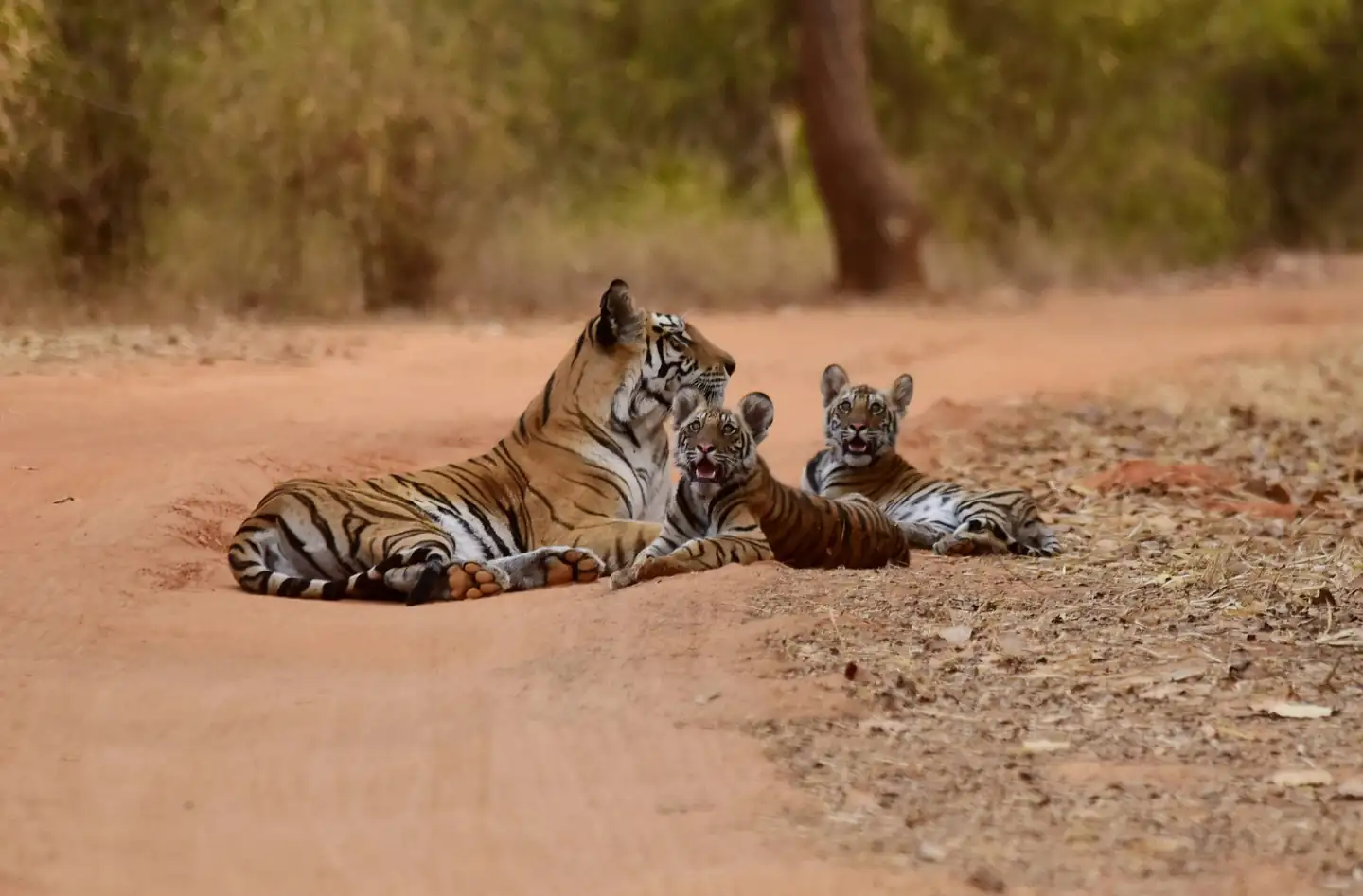
Bandhavgarh Tiger Safari Booking — Zones, Gates & Permits
Three core zones, two bookable buffers, and every single safari departing from the Tala counter. If your goal is to see a wild tiger, Bandhavgarh gives you the best odds in India.
Plan your Bandhavgarh Tiger Safari Booking with complete information on jeep safari options, permits, safari zones, gate timings and travel planning. Explore Tala, Magadhi, Khitauli and buffer zone safari options for your visit to Bandhavgarh Tiger Reserve.
Bandhavgarh Safari Zones
| Safari Zone | Best For | Timing |
|---|---|---|
| Tala Zone | First-time visitors, photography, tiger sightings | Morning and evening safari shifts |
| Magadhi Zone | Strong sightings with fewer vehicles | Morning and evening safari shifts |
| Khitauli Zone | Repeat visitors, birdlife, general wildlife | Morning and evening safari shifts |
| Panpatha Zone | Uncrowded buffer safaris, leopard and sloth bear | Morning and evening safari shifts |
Safari shift timings vary by season, and the forest department may revise them. Please confirm the current official timings before you travel.
Safari Permits & Vehicle Arrangements
| Zone/Gate | Notes |
|---|---|
| Tala Zone (Tala counter) | Core zone — fills fastest |
| Magadhi Zone (Tala counter) | Core zone |
| Khitauli Zone (Tala counter) | Core zone |
| Panpatha Zone (Tala counter) | Buffer zone |
Safari permits and vehicle arrangements depend on availability and applicable booking conditions. Share your travel dates on WhatsApp to receive a written quote before making any payment.
How to Book Bandhavgarh Safari Online
- Select your preferred travel dates.
- Choose the preferred safari zone, subject to availability.
- Share required visitor details and identification information.
- Check available safari options.
- Complete the booking/payment process as instructed.
- Receive booking confirmation according to the existing booking process.
Best Time to Book
Weekends, public holidays and peak season dates often have limited permit availability, so booking well in advance is recommended.
Bandhavgarh safari booking online — permits, zones and slot timings
Planning Bandhavgarh jungle safari booking for the 2026 season? Our desk handles Bandhavgarh safari permit booking from start to finish — availability checks, Bandhavgarh safari reservation in your chosen slot, Bandhavgarh jeep safari booking with an experienced driver and forest guide, and a written confirmation before you travel.
Bandhavgarh core zone safari booking covers Tala, Magadhi and Khitauli — Bandhavgarh Tala zone safari booking is the most contested of the three — while Bandhavgarh buffer zone safari booking at Dhamokhar, Johila and Pachpedi often opens up at short notice. We arrange Bandhavgarh tiger safari 2026 departures as Bandhavgarh safari advance booking well ahead of peak dates, and help with Bandhavgarh tatkal safari booking when only same-week permits remain. Bandhavgarh forest safari booking can be combined with a stay as one of our Bandhavgarh safari tour packages — including a Bandhavgarh weekend safari package, a relaxed Bandhavgarh family safari booking with children, or a multi-vehicle Bandhavgarh group safari booking for corporate and photography groups.
Standard safari slot timings
- Morning safari
- 6:00 AM – 11:00 AM
- Evening safari
- 3:00 PM – 6:00 PM
Entry and exit timings shift slightly with sunrise and sunset through the season; your confirmed permit always carries the exact reporting time for the day.
What our Bandhavgarh safari booking service covers
TheForestStay is an independent tour operator providing end-to-end safari permit booking, Gypsy arrangement, zone selection, and personalized concierge services across MP Tiger Reserves. Bandhavgarh safari booking India-wide enquiries — including Bandhavgarh Tiger Reserve safari booking for travellers arriving from other states or overseas — are handled by the same team on WhatsApp, email or phone.
Bandhavgarh at a glance — key facts
Bandhavgarh holds one of the highest tiger densities of any protected area on earth, concentrated in a relatively compact landscape of sal forest, bamboo, grassland meadows and dramatic sandstone cliffs in Madhya Pradesh's Umaria district. Above it all stands the 2,000-year-old Bandhavgarh Fort, so ancient it appears in the Narada-Pancharatra and the Shiva Purana.
Bandhavgarh also has the simplest logistics of any major Indian tiger reserve. Every safari — core and buffer — departs from a single location. No gate confusion, no wrong-side mistakes, no 70 km pre-dawn drives.
- Location
- Umaria district, Madhya Pradesh
- National park
- 1968
- Tiger reserve
- 1993 (Project Tiger)
- Core area
- ~716 sq km
- Total with buffer
- ~1,536 sq km
- Tiger density
- Among the highest in the world
- Core zones
- Tala, Magadhi, Khitauli
- Buffer zones
- Dhamokhar, Panpatha
- Booking counter
- Tala — for all zones
- Open season
- 1 October – 30 June
- Nearest railway
- Umaria (30 km)
- Nearest airport
- Jabalpur (~191 km)
- Booking
- forest.mponline.gov.in
Why Bandhavgarh
The highest tiger sighting probability in India. In a compact core area, exceptional density translates directly into sighting frequency — many visitors see tigers on their first drive.
Simple, single-point logistics. Unlike Kanha with its three widely separated gates, or Pench with ten gates across two states, all Bandhavgarh safaris depart from the Tala booking counter. This removes the single biggest source of planning error in Indian tiger tourism.
A 2,000-year-old fort inside the reserve. Bandhavgarh Fort sits on a plateau at the centre of the park, surrounded by ancient cave shelters, rock-cut sculptures and the reclining Vishnu statue at Shesh Shaiya.
Habituated, photographable tigers. Bandhavgarh's tigers have lived alongside safari vehicles for decades. Sightings here are often prolonged and close — a significant advantage for photographers.
Compact and efficient. The core area is small enough that a two-night stay with three or four safaris genuinely delivers a complete experience.
Understanding Bandhavgarh's booking system — read this first
All safaris at Bandhavgarh — core zones and buffer zones alike — are booked and conducted from the same location: the Tala booking counter. There is no separate Magadhi gate to drive to, no distant Khitauli entry point, no separate buffer gate on the far side of the reserve.
| Zone | Type | Departs from |
|---|---|---|
| Tala | Core | Tala booking counter |
| Magadhi | Core | Tala booking counter |
| Khitauli | Core | Tala booking counter |
| Dhamokhar | Buffer | Tala booking counter |
| Panpatha | Buffer | Tala booking counter |
📍 View location — Tala booking counter
What this means for you: accommodation planning at Bandhavgarh is dramatically simpler than at Kanha, Pench or Satpura. Stay anywhere near Tala and you are correctly positioned for every zone the reserve offers. Ignore third-party sites that describe Magadhi or Khitauli as separate gates with their own locations.
Bandhavgarh safari zones — complete guide
Bandhavgarh operates three core zones and two bookable buffer zones. All five are accessed from Tala.
Tala Zone — the legendary core
Tala is Bandhavgarh's premier zone and among the most famous tiger habitats in the world. It contains Bandhavgarh Fort, the Shesh Shaiya reclining Vishnu statue, ancient cave shelters and the Chakradhara meadow — one of the finest tiger-viewing grasslands in India. Dense sal forest, bamboo, open meadow and cliff faces within a compact area is a substantial part of why sightings here are so frequent.
- Type
- Core zone
- Departs from
- Tala booking counter
- Highlights
- Bandhavgarh Fort, Shesh Shaiya, Chakradhara meadow
- Reputation
- Historically the finest tiger zone in India
- Best for
- First-time visitors, photographers, tiger sightings
- Availability
- Fills fastest — book earliest
Magadhi Zone — excellent and often underrated
Magadhi is Bandhavgarh's second core zone and in recent years has consistently rivalled Tala for tiger sightings — many experienced guides now rate it as highly. The zone offers more open terrain in places, with good water sources that concentrate wildlife during the dry season, and vehicle pressure is generally lower than Tala. If you cannot secure a Tala permit, Magadhi is not a compromise.
- Type
- Core zone
- Departs from
- Tala booking counter
- Terrain
- Open areas, waterholes, mixed forest
- Reputation
- Rivals Tala for sightings
- Best for
- Strong sightings with fewer vehicles
Khitauli Zone — the quiet core
Khitauli is the least visited of the three core zones, and the habitat differs noticeably — more open teak and mixed forest with grassland patches. It is particularly good for general wildlife: elephants have been recorded here, along with excellent birdlife, gaur and deer species. Tiger sightings occur but are less frequent than Tala or Magadhi.
- Type
- Core zone
- Departs from
- Tala booking counter
- Terrain
- Open teak forest, grassland
- Vehicle pressure
- Lowest of the three core zones
- Best for
- Repeat visitors, birdlife, general wildlife
Dhamokhar Buffer Zone — the booked buffer
Bandhavgarh has substantial buffer forest, and Dhamokhar is the buffer zone booked for tourist safaris. Buffer drives here are considerably underrated — vehicle numbers are far lower, permits are easier to secure at short notice, and sightings of leopard, sloth bear and dhole can be excellent. Tigers move through buffer areas regularly.
- Type
- Buffer zone
- Departs from
- Tala booking counter
- Vehicle pressure
- Low
- Availability
- Easier to book than core zones
- Best for
- Flexible booking, leopard and sloth bear, value
Panpatha Buffer Zone
Panpatha is Bandhavgarh's second bookable buffer zone and one of the least-known safari options in the reserve. The area holds genuinely good forest and sees very few vehicles. Tigers move between the core and Panpatha regularly, and the zone is particularly rewarding for leopard, sloth bear and birdlife.
- Type
- Buffer zone
- Departs from
- Tala booking counter
- Vehicle pressure
- Very low
- Availability
- Generally the easiest zone to book
- Best for
- Uncrowded safaris, photography, late bookings
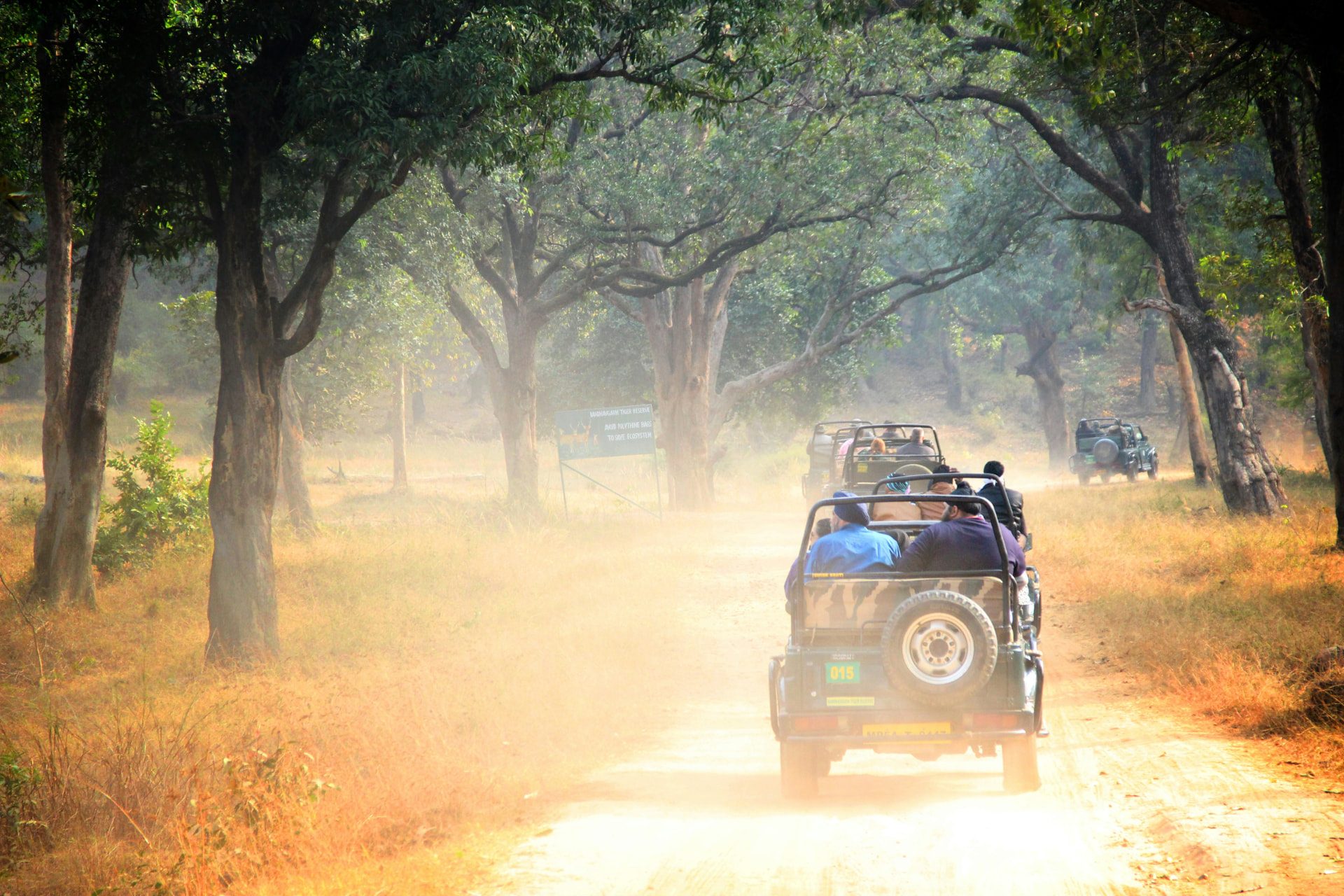
Complete zone reference table
| Zone | Type | Departs from | Character | Location |
|---|---|---|---|---|
| Tala | Core | Tala counter | Fort, meadows, legendary tiger zone | View location |
| Magadhi | Core | Tala counter | Open terrain, waterholes, rivals Tala | View location |
| Khitauli | Core | Tala counter | Teak forest, quietest core zone | View location |
| Dhamokhar | Buffer | Tala counter | Low vehicle pressure, easier booking | View location |
| Panpatha | Buffer | Tala counter | Very low traffic, easiest to book | View location |
Which zone should you book?
| Your priority | Recommended zone |
|---|---|
| First visit, best tiger odds | Tala |
| Tala unavailable | Magadhi — genuinely comparable |
| Fewer vehicles, still core | Khitauli |
| Repeat visitor wanting variety | Khitauli |
| Flexible or late booking | Dhamokhar or Panpatha Buffer |
| Leopard and sloth bear focus | Dhamokhar or Panpatha Buffer |
| Absolute minimum crowds | Panpatha Buffer |
| Fort and heritage | Tala |
| Photography | Tala or Magadhi |
The Forest Stay recommendation: for a two-night stay with three or four safaris, the ideal combination is one Tala, one Magadhi and one buffer drive at Dhamokhar or Panpatha. That gives you the reserve's two strongest core zones plus a genuinely different buffer experience — and improves your odds far more than three drives in the same zone.
Safari booking process
Official booking portal
Permits are booked through the Madhya Pradesh Forest Department's official system at forest.mponline.gov.in, which covers Bandhavgarh alongside all other MP tiger reserves. Numerous private websites use similar names and rank highly in search results — always confirm you are on the official portal before making payment.
Documents required
Original photo identification is mandatory for every visitor. Indian nationals may present Aadhaar, Voter ID, PAN Card or Driving Licence; foreign nationals must carry a passport. The same ID used at booking must be carried during the safari.
Vehicle and guide allocation
Safari gypsies and guides are allocated by the forest department at the time of entry. Visitors cannot select a specific vehicle, driver or guide.
Safari timings and season
Bandhavgarh is open from 1 October to 30 June, closing during the monsoon from July to September.
| Shift | General timing |
|---|---|
| Morning safari | Sunrise to mid-morning |
| Evening safari | Mid-afternoon to sunset |
Morning safaris consistently produce better tiger sightings, particularly during summer when animals move at dawn. The reserve also observes certain seasonal and festival closures determined annually by the MP Forest Department — confirm before travelling.
Bandhavgarh Fort — 2,000 years inside a tiger reserve
Bandhavgarh Fort sits on a plateau roughly 800 metres above sea level at the centre of the reserve, and it is genuinely ancient. The fort finds mention in the Narada-Pancharatra and the Shiva Purana, with references suggesting occupation stretching back around two thousand years. Local tradition holds that the fort was given by Rama to his brother Lakshmana to watch over Lanka — bandhav meaning brother, garh meaning fort.
Surrounding the plateau are numerous man-made caves dating from the 1st century BCE onwards, many containing inscriptions and rock-cut carvings. The most striking feature is Shesh Shaiya — a large reclining statue of Vishnu resting on the seven-hooded serpent Shesha, carved from a single rock beside a natural spring said to be the source of the Charanganga river.
Tala zone safaris pass close to these sites, allowing visitors to combine tiger tracking with genuine antiquity.
Wildlife of Bandhavgarh
Predators
- Bengal tiger — among the highest densities anywhere on earth
- Indian leopard — present throughout, most frequently seen in buffer areas
- Dhole (Indian wild dog) — pack sightings occur
- Sloth bear — common, particularly around rocky terrain
- Jungle cat, golden jackal and striped hyena
Herbivores
- Chital (spotted deer) — extremely abundant, the primary tiger prey base
- Sambar deer — large and impressive
- Gaur (Indian bison) — reintroduced and now well established
- Nilgai, barking deer and chinkara
- Wild boar, common langur and rhesus macaque
Birds — 250+ species
Bandhavgarh's varied habitat supports substantial birdlife. Crested serpent eagle, white-eyed buzzard, Malabar pied hornbill, Indian roller and paradise flycatcher are regularly recorded. The meadows and water bodies attract additional species during winter.
Reptiles
Indian rock python, monitor lizard and various snake species inhabit the reserve.
The landscape
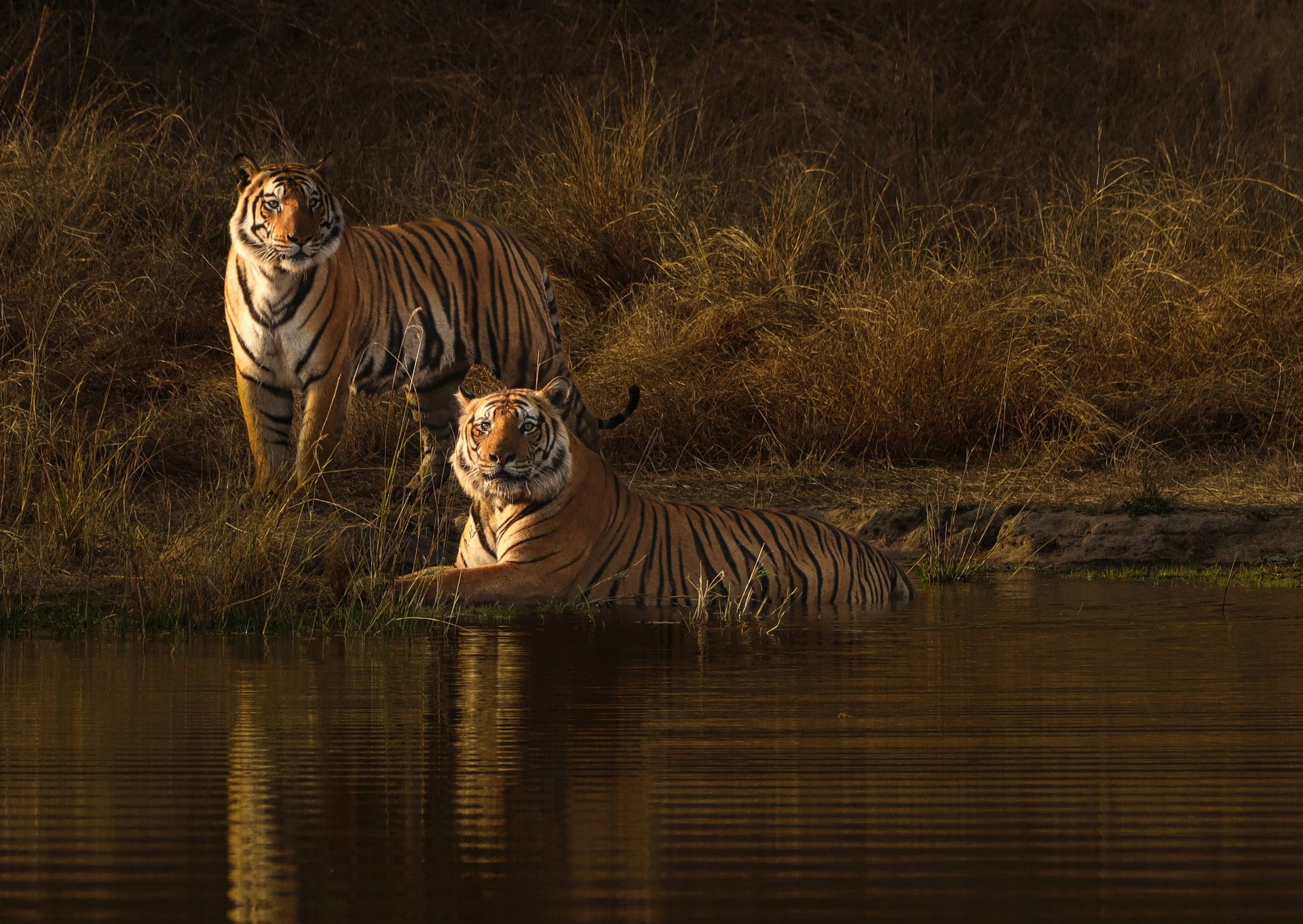
Bandhavgarh's terrain is defined by the Vindhya hills — dramatic sandstone cliffs, plateaus and steep valleys that create striking scenery and excellent leopard habitat.
Between the hills lie sal forest, bamboo thickets and the grassland meadows that make tiger viewing so productive. Chakradhara meadow in Tala zone is among the most famous wildlife-viewing grasslands in India. The Charanganga river, said to originate at the spring beside Shesh Shaiya, flows through the reserve and supports wildlife year-round.
The compact size of the core area — around 716 square kilometres — combined with high prey density is the fundamental reason Bandhavgarh's tiger density is so exceptional.
How to reach Bandhavgarh
By train
Umaria is the nearest railway station at just 30 km — the most convenient railhead for Bandhavgarh. Katni at approximately 95 km and Jabalpur at around 191 km are larger junctions with wider connectivity. Satna and Maihar also serve visitors approaching from the north.
By air
Jabalpur Airport is the nearest at approximately 191 km, connecting to Delhi, Mumbai, Hyderabad and Bengaluru. Khajuraho Airport at around 230 km is a practical alternative for visitors combining Bandhavgarh with the Khajuraho temples.
By road
| From | Distance |
|---|---|
| Umaria | 30 km |
| Katni | 95 km |
| Maihar | ~160 km |
| Jabalpur | 191 km |
| Khajuraho | ~230 km |
| Kanha | ~250 km |
| Panna | ~220 km |
Where to stay
Because all Bandhavgarh safaris depart from Tala, accommodation planning is refreshingly simple.
- Tala village and surrounds — the main accommodation hub, from budget guesthouses to premium jungle lodges. Being close to the booking counter matters for early morning departures.
- Along the Umaria–Tala road — a number of resorts operate along this approach, most within a short drive of the counter.
- Umaria town — basic accommodation 30 km away, practical for budget travellers arriving by train.
The practical rule: stay as close to Tala as your budget allows. Morning safaris begin very early, and every kilometre saved is sleep gained.
Best time to visit Bandhavgarh
November to February — best overall
Comfortable temperatures, clear conditions and pleasant drives across both shifts. Morning mist over the meadows is spectacular for photography, and winter migrants arrive. This is peak season — book permits and accommodation well ahead.
March to June — best for tiger sightings
Water sources shrink and animals concentrate predictably around remaining waterholes while vegetation thins dramatically. Given Bandhavgarh's already exceptional density, this period offers arguably the highest tiger sighting probability available anywhere in India. Temperatures often exceed 42°C, but morning safaris remain highly productive.
October — post-monsoon
The reserve reopens into dense greenery. Sightings are less predictable with abundant water and thick vegetation, but crowds are lower.
July to September — closed
Bandhavgarh closes for the monsoon.
Combining Bandhavgarh with other destinations
- Bandhavgarh + Kanha (6N/7D) — approximately 250 km apart, the classic Madhya Pradesh tiger circuit. Bandhavgarh's density paired with Kanha's meadows and barasingha.
- Bandhavgarh + Panna (5N/6D) — around 220 km apart, and Panna sits conveniently en route to Khajuraho.
- Bandhavgarh + Khajuraho (4N/5D) — tigers and UNESCO temple architecture, roughly 230 km apart.
- Madhya Pradesh Grand Circuit (10N/11D) — Bandhavgarh, Kanha, Pench and Satpura, the state's four finest reserves.
Essential visitor guidelines
Rules
- Carry original photo ID matching your booking on every safari
- Report to the Tala booking counter for all five zones — core and buffer
- Maintain silence throughout the drive
- Never alight from the vehicle
- No feeding or approaching wildlife
- Carry all waste out of the reserve
- Vehicles and guides are department-allocated, not selectable
What to carry
- Original identification for all passengers
- Neutral clothing — olive, khaki, brown, beige
- Warm layers for winter mornings; Bandhavgarh mornings are genuinely cold
- Binoculars and camera with telephoto lens — 300mm minimum recommended
- Water and sun protection for summer visits
- Fully charged batteries and a power bank
Frequently asked questions — Bandhavgarh safari
Which zone is best for tiger sighting in Bandhavgarh?+
Tala zone has historically been the finest, containing Bandhavgarh Fort and the famous Chakradhara meadow. However, Magadhi now rivals Tala for sightings and is often more available. Khitauli is quieter with lower tiger frequency but excellent general wildlife.
Where do Bandhavgarh safaris start from?+
All Bandhavgarh safaris — core zones Tala, Magadhi and Khitauli, plus the Dhamokhar and Panpatha buffers — depart from the Tala booking counter. There are no separate gate locations to drive to. This makes Bandhavgarh logistically the simplest major tiger reserve in India.
How many zones does Bandhavgarh Tiger Reserve have?+
Bandhavgarh operates three core zones — Tala, Magadhi and Khitauli — plus two bookable buffer zones: Dhamokhar and Panpatha. All five zones depart from the Tala booking counter.
What is the difference between core and buffer zone permits at Bandhavgarh?+
Core zone permits cover Tala, Magadhi and Khitauli, while buffer permits cover Dhamokhar and Panpatha. All five zones depart from the Tala booking counter, and buffer permits are usually easier to secure at short notice.
How far is Bandhavgarh from Jabalpur?+
Bandhavgarh is approximately 191 km from Jabalpur, which is the nearest airport. Umaria railway station is much closer at just 30 km and is the most convenient railhead.
Does Bandhavgarh really have the highest tiger density in India?+
Bandhavgarh holds among the highest tiger densities of any protected area in India and indeed the world. Its compact core area combined with exceptional prey density — particularly chital — produces sighting probability that few reserves anywhere can match.
Are the Dhamokhar and Panpatha buffer zones worth booking?+
Yes. Buffer safaris at Bandhavgarh are genuinely underrated. Vehicle numbers are far lower than the core zones, permits are easier to secure at short notice, and sightings of leopard, sloth bear and dhole can be excellent. Panpatha in particular sees very few vehicles and is usually the easiest permit to obtain.
What is Bandhavgarh Fort?+
Bandhavgarh Fort sits on a plateau at the centre of the reserve and is believed to be around 2,000 years old, with mentions in the Narada-Pancharatra and Shiva Purana. Surrounding caves contain ancient inscriptions, and the Shesh Shaiya reclining Vishnu statue lies beside a natural spring nearby. Tala zone safaris pass close to these sites.
When is Bandhavgarh Tiger Reserve open?+
Bandhavgarh is open from 1 October to 30 June and closes during the monsoon from July to September. Additional seasonal and festival closures are announced annually by the MP Forest Department.
How many days should I spend at Bandhavgarh?+
A minimum of two nights allowing three to four safaris is recommended. The ideal combination is one Tala, one Magadhi and one Dhamokhar buffer — spreading your drives across zones improves your odds considerably compared to repeating a single zone.
Which is better — Bandhavgarh or Kanha?+
They offer different strengths. Bandhavgarh has higher tiger density and better sighting probability in a compact area, plus the ancient fort. Kanha has more spectacular open meadow landscape, the unique hard-ground barasingha and a more spacious feel. Many visitors do both — they are approximately 250 km apart.
Can I combine Bandhavgarh with Khajuraho?+
Yes. Khajuraho is approximately 230 km from Bandhavgarh and has its own airport, making a wildlife and UNESCO heritage itinerary straightforward. Panna Tiger Reserve sits conveniently between the two.
Bandhavgarh gives you India's best tiger odds, but permit availability — particularly for Tala — is genuinely competitive. At The Forest Stay we plan zone strategy across Tala, Magadhi, Khitauli, Dhamokhar and Panpatha, arrange stays near the Tala counter, and handle Umaria railway and Jabalpur airport transfers.
Read our complete Bandhavgarh Tiger Reserve Guide for travel planning detail, or Explore Bandhavgarh Tiger Reserve Resorts near the Tala counter.
Ready to plan your wildlife journey?
Share your dates and preferences — our specialists reply within a working day with permits, gypsies and resort options bundled into one clear itinerary.
Offices · Bhopal (HO) · Delhi
Continue exploring
Kanha Tiger Reserve
~250 km away — open maidans, barasingha, the classic MP pairing.
Read more →Panna Tiger Reserve
~220 km away, conveniently en route to Khajuraho.
Read more →Bandhavgarh Resorts
Tala village and Umaria-road lodges, close to the booking counter.
Read more →All Tiger Reserves
Kanha, Bandhavgarh, Pench, Satpura, Panna and more.
Read more →