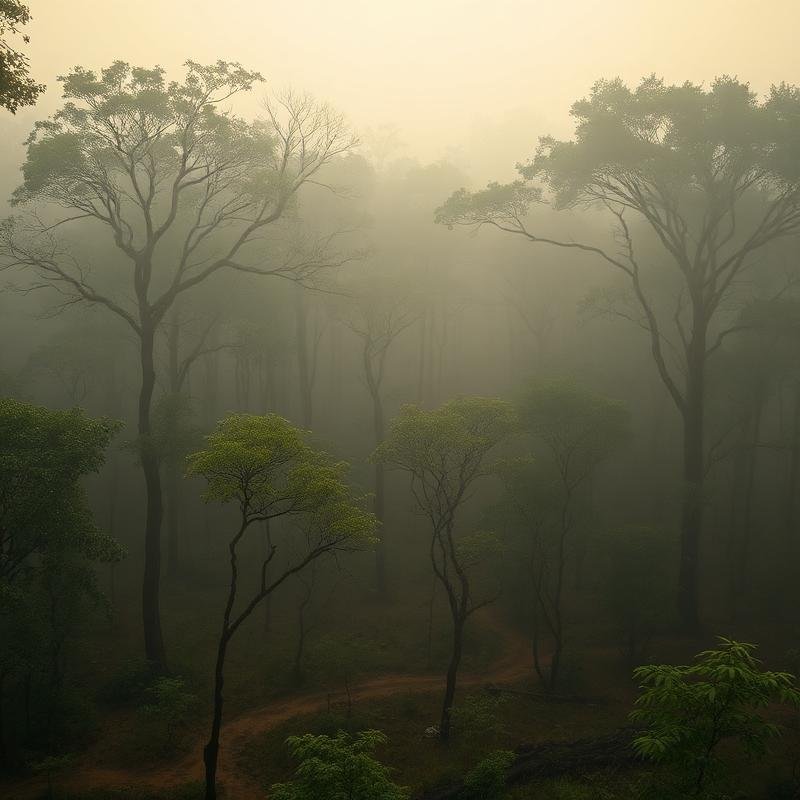
Sanjay-Dubri Tiger Reserve — the birthplace of the world's white tigers.
Every white tiger in every zoo on earth traces back to a single cub found in these forests in 1951. Beyond that claim, Sanjay-Dubri is one of Madhya Pradesh's wildest and least-visited reserves — 831 sq km of sal and bamboo where you will often drive for hours without meeting another vehicle.
How to Book Sanjay-Dubri Tiger Reserve Safari Online
- Share your preferred travel dates and number of travellers
- Choose your safari zone and gate (we help you pick the best one)
- We check live permit availability for your dates
- Receive a written quote stating the total amount payable before payment is requested
- Confirm and receive your booking confirmation on WhatsApp
Sanjay-Dubri safari booking online — permits, zones and slot timings
Planning Sanjay Dubri jungle safari booking for the 2026 season? Our desk handles Sanjay Dubri safari permit booking from start to finish — availability checks, Sanjay Dubri safari reservation in your chosen slot, Gypsy/jeep arrangement for Sanjay Dubri jeep safari booking, and a written confirmation before you travel.
Sanjay Dubri safari booking online covers all five tourism zones — the core zones Bastua and Dubri, plus the buffer zones Badkadol, Gadduha and Koilary — so you can choose a Sanjay Dubri core zone safari booking for the best sighting odds or a Sanjay Dubri buffer zone safari booking for a quieter drive. Our team handles Sanjay Dubri safari booking India-wide permits with no hidden markups. We arrange Sanjay Dubri tiger safari 2026 departures as Sanjay Dubri safari advance booking well ahead of peak dates, and help with Sanjay Dubri tatkal safari booking when only same-week permits remain. Sanjay Dubri forest safari booking can be combined with a stay as one of our Sanjay Dubri safari tour packages — including a Sanjay Dubri weekend safari package, a relaxed Sanjay Dubri family safari booking with children, or a multi-vehicle Sanjay Dubri group safari booking for corporate and photography groups.
Standard safari slot timings
- Morning safari
- 6:00 AM – 11:00 AM
- Evening safari
- 3:00 PM – 6:00 PM
Entry and exit timings shift slightly with sunrise and sunset through the season; your confirmed permit always carries the exact reporting time for the day.
What our Sanjay-Dubri safari booking service covers
TheForestStay is an independent tour operator providing end-to-end safari permit booking, Gypsy arrangement, zone selection, and personalized concierge services across MP Tiger Reserves. Sanjay Dubri safari booking India-wide enquiries — including Sanjay-Dubri Tiger Reserve safari booking for travellers arriving from other states or overseas — are handled by the same team on WhatsApp, email or phone.
On this page
- Sanjay-Dubri at a glance
- Why Sanjay-Dubri
- The story of Mohan
- Safari zones — complete guide
- Zone reference table
- Which zone should you book?
- Safari booking process
- Timings and season
- Wildlife of Sanjay-Dubri
- The landscape & corridor
- How to reach
- Where to stay
- Best time to visit
- Combine with other destinations
- Visitor guidelines
- Plan with The Forest Stay
- FAQs
Sanjay-Dubri at a glance — key facts
In 1951, Maharaja Martand Singh of Rewa discovered and rescued a white tiger cub from these forests. He named him Mohan. Reared at Govindgarh and bred with a tigress named Radha, Mohan fathered the first white tigers born in captivity — and essentially every white tiger alive today descends from him. One of the reserve's forest ranges still carries his name.
Beyond that extraordinary claim to fame, Sanjay-Dubri Tiger Reserve is one of Madhya Pradesh's most genuinely wild and least-visited protected areas — over 831 square kilometres of dense sal and bamboo forest in Sidhi district, forming a critical corridor between Bandhavgarh and Palamau tiger reserves. This guide covers all five safari zones, the booking process and everything you need to plan a visit.
- Full name
- Sanjay-Dubri Tiger Reserve
- Also known as
- Sanjay Tiger Reserve, Sanjay National Park
- Location
- Sidhi district, Madhya Pradesh
- Established
- 1975
- Core area
- ~812 sq km
- Total reserve area
- ~1,674 sq km
- Safari zones
- 5 — 2 core + 3 buffer
- Core zones
- Bastua, Dubri
- Buffer zones
- Badkadol, Gadduha, Koilary
- Historical claim
- Birthplace of white tiger Mohan (1951)
- Corridor
- Connects Bandhavgarh and Palamau
- Open season
- 1 October – 30 June
- From Bandhavgarh
- 110 km, about 2 hours
Why Sanjay-Dubri
The white tiger story. No other reserve on earth can claim to be the origin point of an entire global lineage. Mohan was found here in 1951, and every white tiger in captivity worldwide descends from him.
Genuine solitude. Sanjay-Dubri receives a tiny fraction of the visitors that Bandhavgarh or Kanha see. On most drives you will encounter almost no other vehicles. This is what Indian wildlife tourism felt like decades ago.
Evergreen sal forest. The reserve is best known for its dense, high-quality sal forest interspersed with bamboo — visually distinct from the drier teak landscapes of western Madhya Pradesh.
Occasional wild elephants. Elephants from neighbouring Chhattisgarh venture into the reserve's bamboo forests for temporary shelter — an unusual sighting in central India.
Corridor significance. Sanjay-Dubri connects Bandhavgarh Tiger Reserve with Palamau Tiger Reserve in Jharkhand, making it ecologically important well beyond its own boundaries.
Easy to combine with Bandhavgarh. At just 110 km, roughly two hours, Sanjay-Dubri pairs naturally with a Bandhavgarh trip — solitude alongside Bandhavgarh's tiger density.
The story of Mohan — the first white tiger
This is worth knowing before you visit, because it happened in the forests you will be driving through.
In 1951, the then Maharaja of Rewa, Raja Martand Singh, discovered a white tiger cub in the forests of what is now Sanjay-Dubri Tiger Reserve. White tigers are not albino — they carry a recessive gene producing white fur with dark stripes and blue eyes.
The Maharaja rescued the cub and named him Mohan. Mohan was reared in an enclosure at Govindgarh and later bred with a tigress named Radha, who delivered the first white tigers born in captivity anywhere in the world.
From that single breeding pair, white tigers spread to zoos across every continent. Essentially every white tiger alive today — in India, America, Europe, Asia — traces its ancestry back to Mohan, and therefore to these forests. In recognition, one of the reserve's forest ranges has been named Mohan Range.
Safari zones — complete guide
Sanjay-Dubri operates five tourism zones, and this is where most published information online gets it wrong. According to the official Madhya Pradesh Wildlife Safari Reservation Portal, only Bastua and Dubri are core zones — Badkadol, Gadduha and Koilary are classified as buffer or other zones. Numerous travel websites incorrectly list four core zones. Each zone operates as its own entry point with separate morning and evening permits.
Dubri Zone — core
Dubri is the reserve's flagship zone and the reason the park is commonly called Sanjay-Dubri rather than simply Sanjay Tiger Reserve. It carries the largest permit allocation of any zone — typically around 11 to 12 vehicles in the morning shift and 6 to 7 in the evening, considerably more than any other zone. The terrain is relatively plain with open visibility, suiting herbivore concentrations and producing good leopard sightings.
- Type
- Core zone
- Permits
- ~11–12 morning, ~6–7 evening
- Terrain
- Relatively plain, open visibility
- Best for
- First-time visitors, best availability
Bastua Zone — core
Bastua is the reserve's second core zone, offering a mixed habitat of sal forest, bamboo and seasonal streams. That variety makes it particularly good for sloth bears and produces excellent birdlife. Permit numbers are far more restricted than Dubri — typically around 7 morning and 2 evening vehicles — making Bastua the most exclusive core experience available in the reserve.
- Type
- Core zone
- Permits
- ~7 morning, ~2 evening
- Terrain
- Sal forest, bamboo, seasonal streams
- Best for
- Sloth bears, birdwatching, exclusivity
Badkadol Zone — buffer
Despite frequently being described online as the reserve's main gate serving a core zone, the official portal classifies Badkadol as a buffer or other zone. It is the main entrance for most visitors and carries a solid permit allocation — typically around 8 morning and 4 evening vehicles — making it one of the more accessible options. Road distances to the reserve are usually quoted to this gate.
- Type
- Buffer / other zone
- Permits
- ~8 morning, ~4 evening
- Best for
- Good availability, accessible booking
Gadduha Zone — buffer
Gadduha is a buffer zone with moderate permit availability, typically around 6 morning and 3 evening vehicles. Note that several websites spell this zone as 'Giddha' — the official booking portal uses Gadduha, so book under that spelling.
- Type
- Buffer / other zone
- Permits
- ~6 morning, ~3 evening
- Best for
- Quieter drives
Koilary Zone — buffer
Koilary is characterised by quiet valleys and water sources — scenic, peaceful and well suited to photography and unhurried drives. Permit allocation is typically around 6 morning and 4 evening vehicles.
- Type
- Buffer / other zone
- Permits
- ~6 morning, ~4 evening
- Terrain
- Valleys, water sources
- Best for
- Photography, peaceful safaris
Complete zone reference table
| Zone | Classification | Morning permits | Evening permits | Best for |
|---|---|---|---|---|
| Dubri | Core | ~11–12 | ~6–7 | First visits, best availability |
| Bastua | Core | ~7 | ~2 | Sloth bear, birds, exclusivity |
| Badkadol | Buffer | ~8 | ~4 | Good availability |
| Gadduha | Buffer | ~6 | ~3 | Quieter drives |
| Koilary | Buffer | ~6 | ~4 | Photography, peaceful |
Permit numbers are indicative and set by the Forest Department. Check the official portal for live availability.
Which zone should you book?
| Your priority | Recommended zone |
|---|---|
| First visit, core zone | Dubri — most permits available |
| Sloth bear and birds | Bastua — core zone |
| Most exclusive core experience | Bastua — only ~2 evening permits |
| Good availability | Badkadol or Dubri |
| Photography, peaceful drives | Koilary |
| Quieter buffer drive | Gadduha |
| Late or flexible booking | Any buffer zone |
The Forest Stay recommendation: with only two core zones, prioritise Dubri and Bastua for your core safaris. Dubri has the widest permit availability, while Bastua's tightly restricted evening allocation — around two vehicles — makes it one of the most exclusive drives in Madhya Pradesh. Add a buffer drive at Koilary or Badkadol to complete a three-safari itinerary.
Critical planning note: only Bastua and Dubri are core zones. Many travel websites incorrectly describe four core zones — always verify against the official portal before booking.
Safari booking process
How booking works
Safari permits at Sanjay-Dubri are issued by the Madhya Pradesh Forest Department and are strictly limited by zone and shift. You can book them yourself on the official portal at forest.mponline.gov.in. Our assistance is entirely optional — we check availability for your dates and handle zone selection, accommodation and transfers. Before any payment is requested, we send a written quote stating the total amount payable. Our cancellation and refund policy applies to all bookings and is available on our Terms page.
Booking guidance
Permits are limited and must be booked in advance. Because the reserve is smaller in tourism terms than Bandhavgarh or Kanha, vehicle quotas per zone are correspondingly restricted — Bastua carries around two evening vehicles. That said, Sanjay-Dubri is considerably easier to book than Madhya Pradesh's flagship reserves; this is not a park where permits vanish within hours.
Documents required
Original photo identification is mandatory for every visitor. Indian nationals may present Aadhaar, Voter ID, PAN Card or Driving Licence; foreign nationals must carry a passport. The same ID used at booking must be carried during the safari.
Safari vehicle
Jeep safaris carry up to six people per vehicle. Vehicles and guides are allocated by the forest department.
Safari timings and season
Sanjay-Dubri is open from 1 October to 30 June and closes during the monsoon months of July, August and September. Two safaris operate daily, with timings shifting seasonally in line with sunrise and sunset.
| Shift | Approximate timing |
|---|---|
| Morning safari | Sunrise to mid-morning |
| Evening safari | Around 3:00 PM – 6:30 PM |
Morning safaris consistently produce better sightings, particularly during summer. Weekly and festival closures are determined annually by the MP Forest Department — confirm before travelling.
Wildlife of Sanjay-Dubri
The reserve supports 32 species of mammals, 152 species of birds, 11 species of reptiles, 3 species of amphibians and 34 species of freshwater fish.
Predators
- Bengal tiger — resident population across the core zones
- Indian leopard — frequently sighted across the reserve's rocky terrain
- Dhole (Indian wild dog) — pack sightings occur
- Sloth bear — common, particularly in Bastua zone
- Striped hyena, jungle cat, golden jackal, Indian fox
- Indian wolf — present, rarely sighted
Herbivores
- Chital (spotted deer) — abundant, the primary prey base
- Nilgai (blue bull)
- Chinkara (Indian gazelle)
- Sambar deer — limited to hilly terrain, present in small numbers
- Four-horned antelope (chausingha) and barking deer
- Indian porcupine
Wild elephants
Occasionally, wild elephants from neighbouring Chhattisgarh venture into the reserve's bamboo forests for temporary shelter. This is an unusual and memorable sighting in central India, where elephants are otherwise absent from most tiger reserves.
Birds and reptiles
The dense sal forest and water bodies support a solid list of 152 bird species, with winter bringing additional migratory species to the reserve's valleys and streams. Indian python and various other reptile species inhabit the reserve.
The landscape and the Bandhavgarh–Palamau corridor
Sanjay-Dubri sits across the Vindhya mountain ranges in eastern Madhya Pradesh, with altitude ranging from 200 to 500 metres. The terrain is genuinely varied — plains, mounds, hills, steep cliffs, water bodies, valleys and deep gorges. This topographic diversity, combined with the reserve's capacity to retain water, creates multiple distinct habitat types within a single protected area.
The forest is dominated by sal, with bamboo clumps throughout. Sanjay National Park has open sal and miscellaneous forest with scattered broken bamboo clumps, while the tiger reserve proper holds high-density, good-quality sal and bamboo forest. Meadows with lush grasses fill the valleys, supporting the herbivore populations that sustain the reserve's predators.
These sal forests form a wildlife corridor connecting Bandhavgarh Tiger Reserve in Madhya Pradesh with Palamau Tiger Reserve in Jharkhand. Corridors like this allow genetic exchange between tiger populations that would otherwise become isolated — one of the most significant challenges facing tiger conservation in India.
How to reach Sanjay-Dubri
The distances below refer to Badkadol Gate, the main entrance. Distances to other gates will vary.
By road
| From | Distance | Approximate time |
|---|---|---|
| Bandhavgarh | 110 km | 2 hours |
| Shahdol | 120 km | 2.5 hours |
| Rewa | 130 km | 2.5 hours |
| Singrauli | 130 km | 2.5 hours |
| Prayagraj (Allahabad) | 200 km | 4 hours |
| Katni | 200 km | 4 hours |
| Jabalpur | 250 km | 4 hours |
| Khajuraho | 260 km | 4 hours |
| Varanasi | 260 km | 5 hours |
| Bhopal | 550 km | 7 hours |
By train
Beohari is the nearest railway station. Dubri, Kanchanpur and Joba stations also serve the reserve. Larger junctions at Rewa, Katni and Shahdol offer wider connectivity, with taxi transfers onward.
By air
Jabalpur Airport at 250 km and Khajuraho Airport at 260 km are the nearest options, both around four hours by road. Varanasi and Prayagraj airports are practical for visitors approaching from Uttar Pradesh.
Where to stay
Accommodation at Sanjay-Dubri is limited and considerably simpler than at Bandhavgarh or Kanha. Honest expectations matter here.
- Forest department accommodation — available at Bastua, Bhuimand, Pondi, Kusmi, Dubri, Jogdaha and Bagdara, bookable in advance during office hours through the Field Director's office. Spot booking exists, but reservation rights lie with the Field Director, Sanjay Tiger Reserve.
- No core-area guest houses — the small guest houses that exist are located at the entrance gates and should not be compared with the established lodging at Corbett, Dudhwa or Pilibhit.
- Private hotels — a number operate near the different park gates. Parsili Resort is among the better-known options and is frequently used as a landmark for measuring distances from nearby cities.
- Sidhi and Rewa — standard hotel accommodation for visitors preferring town-based stays.
Planning note: because each of the five zones has a separate gate, confirm your accommodation is positioned sensibly for your booked zone before finalising arrangements.
Best time to visit Sanjay-Dubri
November to April — best overall
The recommended window. Comfortable temperatures, good wildlife activity and pleasant safari conditions, with winter bringing migratory birds to the reserve's water bodies. November through February offers the most comfortable conditions; March and April combine reasonable temperatures with improving sightings as water sources begin to concentrate wildlife.
May to June — hot but productive
Summer in eastern Madhya Pradesh is severe. However, shrinking water sources concentrate animals predictably and thinning vegetation improves visibility. Morning safaris remain productive; afternoon drives are demanding.
July to September — closed
The reserve closes entirely for the monsoon.
Combining Sanjay-Dubri with other destinations
- Sanjay-Dubri + Bandhavgarh (4N/5D) — just 110 km apart, roughly two hours. Combine Bandhavgarh's exceptional tiger density with Sanjay-Dubri's solitude and white tiger history. The strongest pairing available.
- Sanjay-Dubri + Panna (5N/6D) — two contrasting reserves, with Panna's gorges and boat safari complementing Sanjay-Dubri's sal forest.
- Sanjay-Dubri + Bandhavgarh + Jabalpur (6N/7D) — two tiger reserves plus the Marble Rocks at Bhedaghat.
- Varanasi + Sanjay-Dubri (4N/5D) — at 260 km, Sanjay-Dubri is the closest tiger reserve to Varanasi, allowing a spiritual and wildlife combination few visitors realise is possible.
Essential visitor guidelines
Rules
- Carry original photo ID matching your booking on every safari
- Confirm which zone your permit specifies — only Bastua and Dubri are core zones
- Maintain silence throughout the drive
- Never alight from the vehicle
- No feeding or approaching wildlife
- Carry all waste out of the reserve
- Follow forest guide instructions at all times
What to carry
- Original identification for all passengers
- Neutral clothing — olive, khaki, brown, beige
- Warm layers for winter mornings
- Binoculars and camera with telephoto lens
- Water and food — facilities near the gates are minimal
- Sun protection for summer visits
- Fully charged batteries and a power bank
Setting expectations honestly
Sanjay-Dubri is a genuinely wild reserve with limited tourism infrastructure. Accommodation is basic, facilities near the gates are minimal, and safari operations are less formalised than at Bandhavgarh or Kanha. Tiger sightings are less frequent — this is a larger, denser forest with a smaller tiger population and thinner tourism pressure.
What Sanjay-Dubri offers instead is genuine solitude, dense sal forest, excellent leopard and sloth bear sightings, occasional wild elephants, and a historical connection no other reserve on earth can claim. Visitors who arrive understanding this leave delighted.
Plan your Sanjay-Dubri safari with The Forest Stay
Sanjay-Dubri rewards proper planning more than most reserves, precisely because it is less developed. Five zones with five separate gates, limited accommodation and restricted permit availability mean the details genuinely matter.
- Zone selection matched to your interests and permit availability
- Safari permits across Dubri and Bastua core zones, plus Badkadol, Gadduha and Koilary buffers
- Forest department accommodation coordination
- Private resort recommendations near the relevant gates
- Combined Sanjay-Dubri and Bandhavgarh itineraries — just 110 km apart
- Varanasi, Prayagraj and Jabalpur transfers
- Sloth bear and leopard focused itineraries
- Photography trips built around the quieter zones
Permits can also be booked directly by you on the official MP Forest Department portal; our assistance is optional and quoted separately in writing.
Frequently asked questions — Sanjay-Dubri safari
How many safari zones does Sanjay-Dubri Tiger Reserve have?+
Sanjay-Dubri has five tourism zones, but only two are core zones — Bastua and Dubri. Badkadol, Gadduha and Koilary are classified as buffer or other zones on the official Madhya Pradesh Wildlife Safari Reservation Portal. Many travel websites incorrectly list four core zones.
Which are the core zones at Sanjay-Dubri?+
Only Bastua and Dubri are core zones. This is confirmed on the official MP Forest Department booking portal, which classifies Badkadol, Gadduha and Koilary as buffer or other zones.
Which zone is best at Sanjay-Dubri?+
Dubri is the most popular core zone and carries the largest permit allocation — around 11 to 12 morning vehicles — making it the easiest to book and the natural choice for first-time visitors. Bastua is the second core zone, excellent for sloth bears and birdlife, with a tightly restricted evening allocation of around two vehicles.
What is the white tiger connection at Sanjay-Dubri?+
The world-famous white tiger Mohan was discovered and rescued from these forests by Maharaja Martand Singh of Rewa in 1951. Mohan was bred with a tigress named Radha, producing the first white tigers born in captivity. Essentially every white tiger in zoos worldwide descends from Mohan. One of the reserve's ranges is named Mohan Range in his memory.
How far is Sanjay-Dubri from Bandhavgarh?+
Sanjay-Dubri is 110 km from Bandhavgarh, roughly a two-hour drive. This makes combining the two reserves genuinely straightforward and is the most popular pairing for visitors.
How do I book a Sanjay-Dubri safari?+
Safari permits are issued by the Madhya Pradesh Forest Department and are limited by zone and shift. You can book them yourself on the official MP Wildlife Safari Reservation Portal at forest.mponline.gov.in. Our assistance is optional: send us your dates and we will check availability. Before any payment is requested, we send a written quote stating the total amount payable. Our cancellation and refund policy applies to all bookings and is available on our Terms page.
When is Sanjay-Dubri Tiger Reserve open?+
The reserve is open from 1 October to 30 June and closes during the monsoon months of July, August and September. The best time to visit is November to April.
Are there wild elephants at Sanjay-Dubri?+
Occasionally, yes. Elephants from neighbouring Chhattisgarh venture into the reserve's bamboo forests for temporary shelter — an unusual sighting in central India, where elephants are absent from most tiger reserves.
Is accommodation available at Sanjay-Dubri?+
Yes, though limited. Forest department accommodation is available at Bastua, Bhuimand, Pondi, Kusmi, Dubri, Jogdaha and Bagdara, bookable through the Field Director's office. Private hotels operate near the various gates, with Parsili Resort among the better known. The reserve has no guest houses inside the core area.
What wildlife can I see at Sanjay-Dubri?+
The reserve supports 32 mammal species including tiger, leopard, sloth bear, dhole, hyena, jungle cat, Indian wolf and four-horned antelope, alongside 152 bird species, 11 reptile species and 34 freshwater fish species. Chital, nilgai and chinkara form the primary prey base.
Is Sanjay-Dubri good for a first tiger safari?+
It depends on expectations. Sanjay-Dubri offers genuine wilderness with almost no crowds, but tiger sightings are less frequent than at Bandhavgarh and infrastructure is basic. Travellers who value solitude and authenticity over sighting probability will find it exceptional; those specifically wanting to photograph a tiger should consider Bandhavgarh first.
What is the closest tiger reserve to Varanasi?+
Sanjay-Dubri, at approximately 260 km — around five hours by road. This makes it a viable wildlife addition to a Varanasi itinerary, a combination very few visitors realise is possible.
Ready to plan your wildlife journey?
Share your dates and preferences — our specialists reply within a working day with permits, gypsies and resort options bundled into one clear itinerary.
Offices · Bhopal (HO) · Delhi
Continue exploring
Bandhavgarh Tiger Reserve
110 km away — the strongest pairing with Sanjay-Dubri.
Read more →Panna Tiger Reserve
Gorges, the Ken boat safari and a landmark tiger recovery.
Read more →Kanha Tiger Reserve
Barasingha, maidans and three main gates — MP's flagship reserve.
Read more →Tiger safari booking
Permits, gypsies and naturalists across every reserve.
Read more →