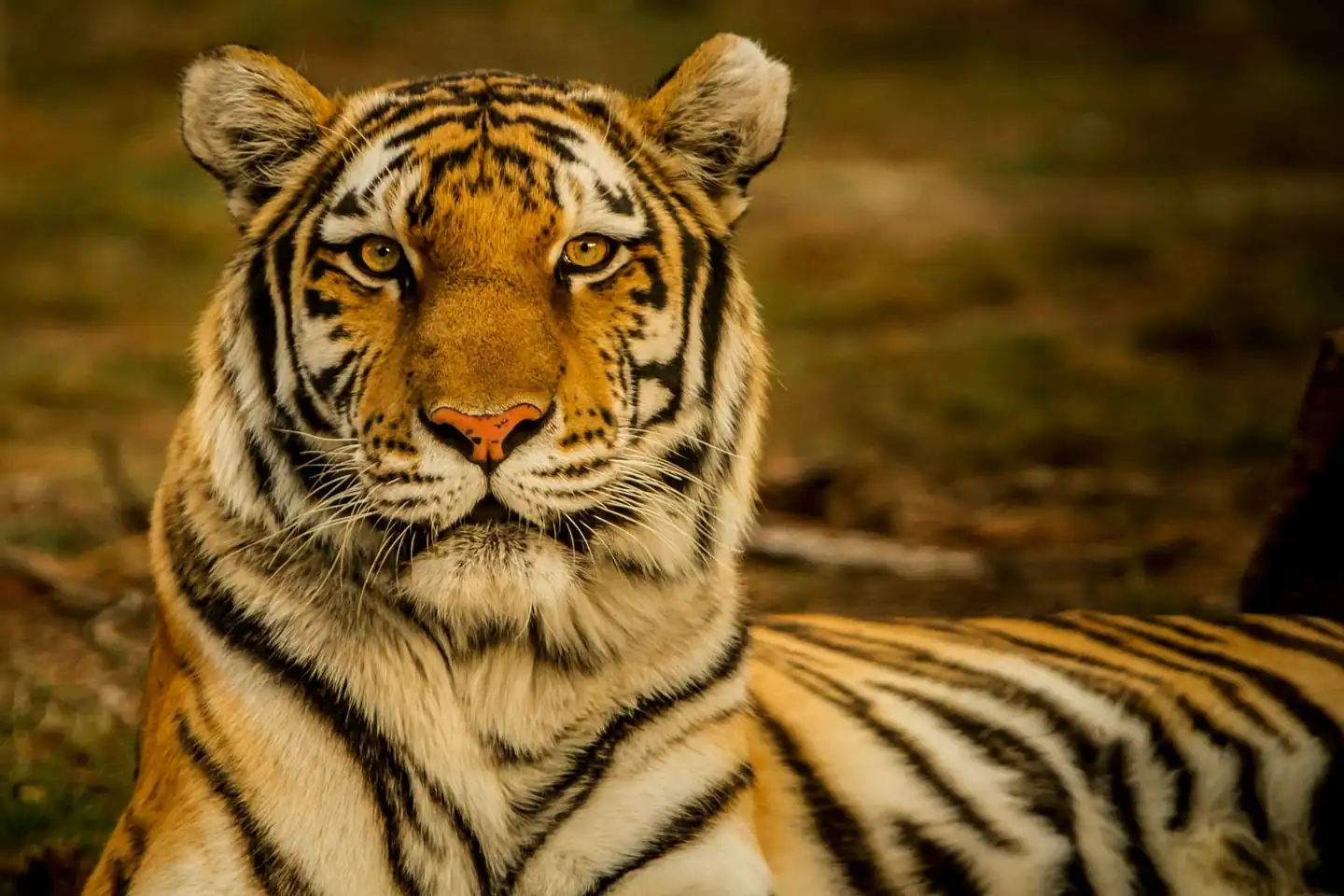
Ranthambore Tiger Reserve Safari — India's most complete guide (2025–26).
Zone-by-zone tiger sighting rates, the full booking process, best time to visit, and the famous tigers you might meet — everything you need before you arrive.
Ranthambore safari booking online — permits, zones and slot timings
Planning Ranthambore jungle safari booking for the 2026 season? Our desk handles Ranthambore safari permit booking from start to finish — availability checks, Ranthambore safari reservation in your chosen slot, open Gypsy jeep and 20-seater canter, and a written confirmation before you travel.
From Ranthambore safari booking online to Ranthambore safari booking from Jaipur, we arrange Ranthambore tiger safari booking, Ranthambore jeep safari booking and Ranthambore canter safari booking across every Ranthambore zone booking option — including Ranthambore core zone safari booking and Ranthambore buffer zone safari booking. Ranthambore safari booking India-wide enquiries are handled by the same team. We arrange Ranthambore tiger safari 2026 departures as Ranthambore safari advance booking well ahead of peak dates, and help with Ranthambore tatkal safari booking when only same-week permits remain. Ranthambore forest safari booking can be combined with a stay as one of our Ranthambore safari tour packages — including a Ranthambore weekend safari package, a relaxed Ranthambore family safari booking with children, or a multi-vehicle Ranthambore group safari booking for corporate and photography groups.
Standard safari slot timings
- Morning safari
- 6:00 AM – 11:00 AM
- Evening safari
- 3:00 PM – 6:00 PM
Entry and exit timings shift slightly with sunrise and sunset through the season; your confirmed permit always carries the exact reporting time for the day.
What our Ranthambore safari booking service covers
TheForestStay is an independent tour operator providing end-to-end safari permit booking, Gypsy arrangement, zone selection, and personalized concierge services across MP Tiger Reserves. Ranthambore safari booking India-wide enquiries — including Ranthambore Tiger Reserve safari booking for travellers arriving from other states or overseas — are handled by the same team on WhatsApp, email or phone.
Ranthambore at a glance
A Bengal tiger walks out of golden grassland, crosses a shallow lake and pauses against a 10th-century fort crumbling at the water's edge. That single frame is why Ranthambore Tiger Reserve in Rajasthan is India's most famous tiger destination — open terrain, high tiger density, ancient monuments inside the forest, and a booking system you can navigate from your phone.
- Location
- Sawai Madhopur, Rajasthan
- Total area
- 1,334 sq km (core + buffer)
- Tiger population
- 75–80+ and growing
- Safari zones
- 10 zones (core 1–5, buffer 6–10)
- Open season
- 1 October – 30 June
- Closed
- July, August, September (monsoon)
- Nearest railway
- Sawai Madhopur Junction
- Nearest airport
- Jaipur (180 km)
- UNESCO heritage
- Ranthambore Fort, inside the park
- Permits
- Official Rajasthan Forest Department portal
Why Ranthambore is different from every other tiger reserve
Most tiger reserves ask you to be patient and hope for the best. Ranthambore does not. Unlike dense jungle reserves where tigers vanish into thick vegetation, Ranthambore's dry deciduous forest, wide lake shores, low undergrowth and rocky ridgelines create clear sightlines. It is the only reserve in India where you can photograph a tiger with a medieval fort and a shimmering lake in the same frame — and the tigers here, used to vehicles for decades, often allow long, close-range sightings.
- Highest tiger sighting probability among India's major reserves
- Open terrain means clear sightlines and better photography
- The UNESCO-listed 10th-century Ranthambore Fort stands inside the reserve
- Three lakes — Padam Talao, Raj Bagh and Malik Talao — draw tigers daily
- Machli's dynasty: the most documented tiger bloodline in the world
- 300+ bird species as a bonus on every drive
The 10 safari zones — zone-by-zone guide
Zones 1–5 are core zones with the highest tiger density; Zones 6–10 are buffer zones, less crowded and increasingly productive as the population grows. The golden rule: zone selection matters more than vehicle type. A canter in Zone 3 beats a jeep in Zone 9.
Zone 3 — India's single best zone for tiger photography
Sighting rate 70–80%The crown jewel of Ranthambore: Padam Talao (the largest lake), the Raj Bagh ruins rising out of the water, and Jogi Mahal. On summer mornings tigers arrive at these lakes as reliably as sunrise. Riddhi (T-124), Machli's great-granddaughter and the current queen of Ranthambore, raises her three cubs here.
Book Zone 3 if: you have only one safari, you love photography, or you want to see Riddhi and her cubs.
- Key spots
- Padam Talao, Raj Bagh, Jogi Mahal, Mandook
- Resident tigers
- Riddhi (T-124) and 3 cubs
- Best safari
- Morning — 6 AM start in summer
- Vehicle
- Jeep and canter both allowed
Zone 4 — dense forest, dominant males, family sightings
Sighting rate 65–75%Zone 4 borders Zone 3 and tigers move freely between them. The terrain shifts from open lakeside to hilly forest with deep valleys and secluded waterholes — territory dominant males prefer. Ganesh (T-120), Riddhi's partner, is regularly active here, and cub sightings are common.
Book Zone 4 if: you want to see a tiger family, prefer evening safaris, or Zone 3 is sold out.
- Key spots
- Singh Dwar, Malik Talab, Lakkad Da, Tamakhan
- Resident tigers
- Riddhi (T-124), Ganesh (T-120)
- Best safari
- Evening — golden light, active movement
- Vehicle
- Jeep and canter both allowed
Zone 2 — tiger and leopard in one safari
Sighting rate 55–65%Open grasslands and rocky outcrops create ideal hunting ground for both tigers and leopards, making Zone 2 the top choice if you want a chance at both predators on a single drive. Its tigers are famously bold and unhurried around vehicles.
- Key spots
- Phuta Kot, Nal Ghati, Singh Dwar
- Resident tigers
- T-57, T-102, Noor (T-39)
- Bonus wildlife
- Leopard — highest sighting rate in the park
- Vehicle
- Jeep and canter both allowed
Zone 1 — intimate and uncrowded
Sighting rate 50–60%Zone 1 draws fewer vehicles than Zones 3 and 4, so when a tiger appears you may have it almost to yourself. Rocky, dense terrain gives sightings here a raw quality veteran wildlife travellers prefer.
Book Zone 1 if: you are a repeat visitor wanting a quieter experience, or have already done Zones 3 and 4.
- Key spots
- Peela Pani, Tuti ka Nalla waterholes
- Resident tigers
- Noor (T-39), Sultan (T-72)
Zone 5 — Kachida Valley, the underrated gem
Sighting rate 50–60%Kachida Valley is a leopard stronghold that also receives frequent tiger visits. Local guides recommend Zone 5 as the strongest alternative when Zones 3 and 4 are sold out, and first-timers are often pleasantly surprised.
- Key spot
- Kachida Valley — leopard hotspot
Zone 6 — best of the buffer zones
Sighting rate 40–50%As Ranthambore's tiger population expands, buffer sightings improve every season. Zone 6 is the strongest buffer option, with Noor frequently crossing over from the core, and far lower crowd levels.
- Resident tigers
- Noor (T-39) crossover from core
Zones 7 & 8 — jeep-only, photographer's choice
Sighting rate 30–40%Canters are not allowed here, which makes these the quietest zones in the park. Open grasslands, diverse birdlife and occasional tiger crossings suit dedicated wildlife photographers.
- Important rule
- Jeep (Gypsy) only — no canters permitted
Zones 9 & 10 — new tiger territory
Sighting rate 20–35% and risingTigress T-59 was recently seen with 10-month-old cubs in Zone 9 — the first confirmed litter in this area. As the population pushes past 75 individuals, new territories are being claimed in the buffer, and early visitors here are witnessing history.
Zone selection at a glance
| Your situation | Book this zone |
|---|---|
| First visit, 1 safari | Zone 3 |
| First visit, 2 safaris | Zone 3 (morning) + Zone 4 (evening) |
| 3–4 safaris | Zones 3, 4, 2 and Zone 6 |
| Photography specialist | Zone 3 — lake, ruins and tiger |
| Tiger and leopard both | Zone 2 or Zone 5 |
| Family with children | Zone 4 — Riddhi and her 3 cubs |
| Repeat visitor | Zone 1 or Zones 7/8 |
| Quieter, less crowded | Zone 5 or Zone 6 |
Safari booking — the three permit categories
Ranthambore permits are issued by the Rajasthan Forest Department through its official online portal. There are three booking categories, and understanding all three is essential to securing the zone you want.
Advance booking — the best option
Advance quota opens 90 days before your safari date, with the widest choice of zones and vehicles. On the 90th day bookings open at a fixed time and popular zones — especially 3 and 4 — fill within hours, so being ready at the exact opening moment matters.
Tatkal booking — the urgent option
Tatkal opens 7 days before your date. Only jeep (Gypsy) safaris are available, and only in Zones 1–6.
Current booking — same day
Current booking opens 1 day before at 10:00 AM for the next morning safari, and same-day for the evening safari. Canter only, with very limited seats.
| Category | Opens | Vehicle | Zones |
|---|---|---|---|
| Advance | 90 days before | Jeep + canter | 1–10 |
| Tatkal | 7 days before | Jeep only | 1–6 |
| Current | 1 day before, 10 AM | Canter only | Limited |
Jeep vs canter
| Feature | Jeep (Gypsy) | Canter |
|---|---|---|
| Capacity | 6 people | 20 people |
| Experience | Private, flexible, quiet | Shared, higher vantage point |
| Best for | Photography, couples, small groups | Families, larger groups, Zone 3/4 when jeeps sell out |
| Zones | All 10 zones | Zones 1–6, 9–10 (not 7 or 8) |
Safari timings and weekly closures
| Season | Morning safari | Evening safari |
|---|---|---|
| Winter (Oct–Feb) | 7:00 AM – 10:30 AM | 2:00 PM – 5:30 PM |
| Summer (Mar–Jun) | 6:00 AM – 9:30 AM | 3:30 PM – 7:00 PM |
Timings shift with sunrise and sunset — the park opens roughly an hour after sunrise and closes before sunset. Morning safaris consistently produce better tiger sightings.
| Zones | Closed day |
|---|---|
| Zones 1–5 (core) | Every Wednesday |
| Zones 6–10 (buffer) | Every Tuesday |
Plan your travel dates around these closures, especially if you are targeting core zones.
Best time to visit Ranthambore
Summer (April–June) — peak tiger season
As temperatures climb and seasonal water dries up, tigers concentrate around the three lakes in Zones 3, 4 and 5. Sighting rates reach 65–80% in prime zones, and 6 AM morning safaris are especially productive. The trade-off is heat — May and June can exceed 40°C, though early morning and evening drives stay comfortable.
Winter (October–February) — best overall experience
Cool 15–25°C days, clear skies and lush post-monsoon vegetation make winter the most comfortable season. Tiger sighting rates are moderate (35–50%) but the overall experience is outstanding for families and first-timers. October is the peak demand month and fills 90 days out.
March — the hidden sweet spot
Comfortable temperatures combine with rising tiger activity as summer sets in. Sighting rates climb toward 50–55% with lower crowds than peak winter.
Famous tigers of Ranthambore
Ranthambore's tigers are among the most documented wild animals in history — each with a number, a name and a life story. Knowing who's who transforms a safari.
Machli (T-16) — the original queen
Sighting rate LegacyNamed for the fish-shaped markings on her cheeks, Machli was the most photographed tigress in the world. She ruled the lake area for over a decade, famously defeated a large mugger crocodile, raised multiple litters and appeared in BBC, National Geographic and Discovery films. She died in 2016 at around 19 — most tigers in Ranthambore today are her descendants.
Riddhi (T-124) — current queen of the lakes
Sighting rate Zones 3 & 4Machli's great-granddaughter, born 2018, took the coveted lake territory after challenging her own mother Arrowhead. Seeing Riddhi with her cubs at Padam Talao is the defining Ranthambore experience of this generation.
- Status
- Active — raising 3 cubs
Ganesh / Charger (T-120) — dominant male
Sighting rate Zones 3, 4 & 5Grandson of the legendary Krishna (T-19), born around 2018, known for an extraordinary predatory range. He entered the tourism zones in 2021 and is Riddhi's partner and father of her three cubs.
- Status
- Active dominant male
Noor (T-39) — the bold one
Sighting rate Zones 1, 2 & 6One of the most reliably sighted tigresses in the park, famous for her unbothered temperament around safari vehicles. Her descendants also roam Ranthambore.
- Status
- Active
Arrowhead (T-84) — former queen
Sighting rate Secondary territoryMachli's granddaughter and former queen of the lakes. At 17+ she became the oldest known surviving wild tigress in the world, and more than half of Ranthambore's current tigers descend from her bloodline — displaced from the lakes by her own daughter Riddhi.
Tiger sighting success rates — zone summary
| Zone | Success rate | Resident tigers | Best feature |
|---|---|---|---|
| Zone 3 | 70–80% | Riddhi (T-124) + cubs | Lake, ruins and tiger |
| Zone 4 | 65–75% | Riddhi, Ganesh (T-120) | Family sightings, forest |
| Zone 2 | 55–65% | T-57, Noor (T-39) | Tiger and leopard both |
| Zone 1 | 50–60% | Noor (T-39), Sultan (T-72) | Intimate, uncrowded |
| Zone 5 | 50–60% | Multiple | Kachida Valley, leopards |
| Zone 6 | 40–50% | Noor crossover | Best buffer zone |
| Zones 7–8 | 30–40% | Occasional | Jeep-only, photography |
| Zones 9–10 | 20–35% | Growing population | New territory |
Overall park success rate: 60–70% in peak season (April–June) and 35–50% in winter (October–February).
How to reach Ranthambore
By train (recommended)
Sawai Madhopur Junction sits on the main Delhi–Mumbai line with direct trains from Delhi, Jaipur, Agra, Mumbai and Ahmedabad. Roughly 2 hours from Jaipur, 4–5 hours from Delhi.
By road
| From | Distance | Time |
|---|---|---|
| Jaipur | 180 km | 2.5 hours |
| Delhi | 400 km | 5–6 hours |
| Agra | 230 km | 3 hours |
| Mumbai | 1,200 km | 18–20 hours |
By air
Jaipur International Airport (JAI) is the nearest airport, 180 km away, with flights from Delhi, Mumbai, Bangalore and Hyderabad. Taxis to Ranthambore resorts take about 2.5 hours.
Wildlife beyond tigers
- Predators: leopard (especially Kachida Valley, Zone 5), sloth bear, striped hyena, jungle cat, Indian wolf
- Large mammals: sambar deer, chital, nilgai, chinkara, wild boar, rhesus macaque, common langur
- Reptiles: marsh mugger crocodile at Padam Talao, monitor lizard
- Birds (300+ species): crested serpent eagle, painted stork, ruddy shelduck, kingfisher, Indian roller, paradise flycatcher, osprey, peafowl
The UNESCO-listed 10th-century Ranthambore Fort inside the reserve can be visited as a separate excursion; its temples are still active pilgrimage sites and its hilltop offers panoramic views across the whole reserve.
2025–26 update — three apex predators in one landscape
Cheetahs introduced at Kuno National Park in Madhya Pradesh have begun venturing toward Ranthambore in 2025–26. For the first time in recorded history, Ranthambore may soon host three apex predators — Bengal tiger, leopard and cheetah — simultaneously, an unprecedented ecological event being monitored closely by wildlife authorities.
Plan your Ranthambore safari with TheForestStay
Ranthambore is a destination where planning decides everything. The right zone, the right timing and a resort near the right gate can be the difference between one distant tiger and three at sunrise.
- Zone selection based on current tiger movement and season
- Safari permit booking strategy and timing across all three categories
- Resort recommendations near Zone 3, Zone 4 and the buffer gates
- Combined itineraries with Jaipur, Agra and Madhya Pradesh tiger reserves
- Group and family safari coordination
Frequently asked questions
Which is the best zone for tiger sighting in Ranthambore?+
Zone 3 is consistently rated the best zone for tiger sightings in Ranthambore, with success rates of 70–80% during peak season. It features Padam Talao lake and the Raj Bagh ruins — perfect for photographing tigers against a historical backdrop. Zone 4 is a close second, especially for family and cub sightings.
How far in advance should I book a Ranthambore safari?+
Advance quota opens exactly 90 days before your safari date on the official Rajasthan Forest Department portal, and popular zones fill within hours of opening. For October visits, bookings open in July.
What is the tiger sighting success rate in Ranthambore?+
Overall success rates are 60–70% during summer (April–June) and 35–50% during winter (October–February). In Zones 3 and 4 during summer, rates can exceed 75%. Most visitors book 2–4 safaris to maximise their chances.
Is jeep safari better than canter safari in Ranthambore?+
For photography and a more intimate experience, jeep is better — but zone selection matters more than vehicle type. A canter in Zone 3 produces better sightings than a jeep in Zone 9 or 10.
What is Tatkal booking in Ranthambore?+
Tatkal is the emergency booking category that opens 7 days before your safari date. It is available only for jeep safaris and only in Zones 1–6. Use it when advance quota is sold out.
Which months are best for tiger sightings in Ranthambore?+
April, May and June offer the highest tiger sighting probability as tigers congregate around the three lakes in the core zones. March and October are excellent secondary choices with more comfortable temperatures.
Who is the most famous tiger in Ranthambore right now?+
Riddhi (T-124), great-granddaughter of the legendary Machli, is the dominant female of Zones 3 and 4 and is currently raising three cubs with dominant male Ganesh (T-120).
Are buffer zones (6–10) worth visiting in Ranthambore?+
Increasingly yes. As the tiger population grows beyond 75, younger tigers are establishing territories in buffer zones. Zone 6 already offers 40–50% sighting rates and Zone 9 recently recorded a new litter of cubs — with far fewer vehicles.
What should I carry for a Ranthambore safari?+
Wear neutral colours (khaki, olive, beige — no white or bright shades). Carry binoculars, a camera with at least a 300mm zoom, hat, sunscreen, a reusable water bottle and a light jacket for early winter mornings. Mobile network inside the park is limited, so download offline maps.
Can I combine Ranthambore with Madhya Pradesh tiger reserves?+
Yes — Ranthambore pairs well with Kanha, Bandhavgarh and Pench. TheForestStay can plan a combined 7–10 day itinerary across Rajasthan and Madhya Pradesh.
Ready to plan your wildlife journey?
Share your dates and preferences — our specialists reply within a working day with permits, gypsies and resort options bundled into one clear itinerary.
Offices · Bhopal (HO) · Delhi
Continue exploring
Ranthambore Resorts
Stays close to the park gates, from heritage havelis to modern lodges.
Read more →Kanha Tiger Reserve
Sal forests and vast meadows — a classic pairing with Ranthambore.
Read more →Bandhavgarh Safari Booking
India's highest tiger density, easy to combine on one itinerary.
Read more →Pench Tiger Reserve
The Jungle Book landscape on the MP–Maharashtra border.
Read more →Sariska Tiger Reserve
Rajasthan's other tiger landscape, an easy add-on from Delhi or Jaipur.
Read more →All Tiger Reserves
Kanha, Bandhavgarh, Pench, Satpura, Panna and more.
Read more →