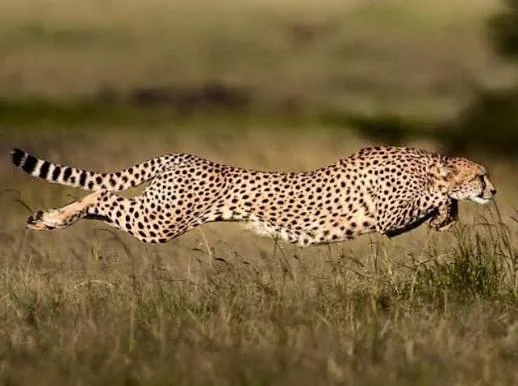
Kuno Cheetah Safari Booking — Entry Fee, Gates & Timings
Declared extinct in India in 1952. Returned on 17 September 2022. Since 1 October 2025 you can see them — 54 cheetahs, three safari gates, and open grassland unlike anywhere else in India.
How to Book Kuno National Park Safari Online
- Share your preferred travel dates and number of travellers
- Choose your safari zone and gate (we help you pick the best one)
- We check live permit availability for your dates
- Receive a written quote stating the total amount payable before payment is requested
- Confirm and receive your booking confirmation on WhatsApp
Kuno safari booking online — permits, zones and slot timings
Planning Kuno jungle safari booking for the 2026 season? Our desk handles Kuno safari permit booking from start to finish — availability checks, Kuno safari reservation in your chosen slot, open Gypsy/jeep arrangement for Kuno jeep safari booking, and a written confirmation before you travel.
Kuno safari booking online covers all three operational gates — Tiktoli, Ahera and Peepalbawadi — so your Kuno cheetah safari booking can start from the most convenient entry. Whether you want a Kuno core zone safari booking near the release ranges or a buffer drive, our team quotes Kuno safari booking India-wide permits with no hidden markups. We arrange Kuno cheetah safari 2026 departures as Kuno safari advance booking well ahead of peak dates, and help with Kuno tatkal safari booking when only same-week permits remain. Kuno forest safari booking can be combined with a stay as one of our Kuno safari tour packages — including a Kuno weekend safari package, a relaxed Kuno family safari booking with children, or a multi-vehicle Kuno group safari booking for corporate and photography groups.
Standard safari slot timings
- Morning safari
- 6:00 AM – 11:00 AM
- Evening safari
- 3:00 PM – 6:00 PM
Entry and exit timings shift slightly with sunrise and sunset through the season; your confirmed permit always carries the exact reporting time for the day.
What our Kuno safari booking service covers
TheForestStay is an independent tour operator providing end-to-end safari permit booking, Gypsy arrangement, zone selection, and personalized concierge services across MP Tiger Reserves. Kuno safari booking India-wide enquiries — including Kuno National Park safari booking for travellers arriving from other states or overseas — are handled by the same team on WhatsApp, email or phone.
On this page
- Kuno at a glance
- Project Cheetah story
- Safari permits & vehicle options
- Safari gates & zones
- Gates quick reference
- Gate selection guide
- How to book
- Booking process
- Safari timings
- Safari rules
- Wildlife beyond cheetahs
- The landscape
- How to reach
- Best time to visit
- Where to stay
- Combine with other destinations
- Setting expectations
- FAQs
Kuno at a glance — key facts
In 1952, India officially declared the cheetah extinct. The world's fastest land animal, once found across the country's open grasslands, had vanished entirely. Seventy years later, on 17 September 2022, eight cheetahs stepped out of transport crates in Madhya Pradesh — the first intercontinental translocation of a large carnivore in history.
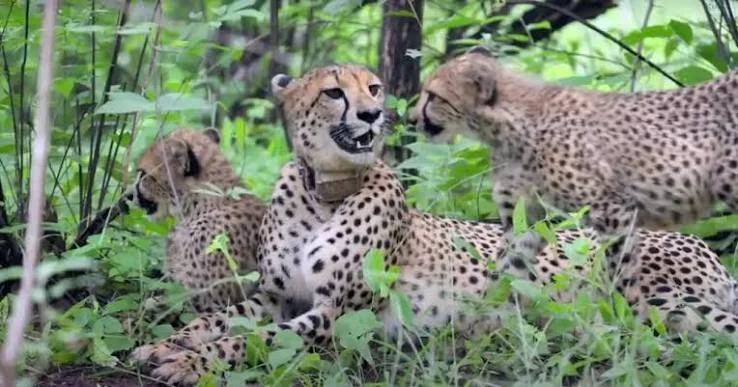
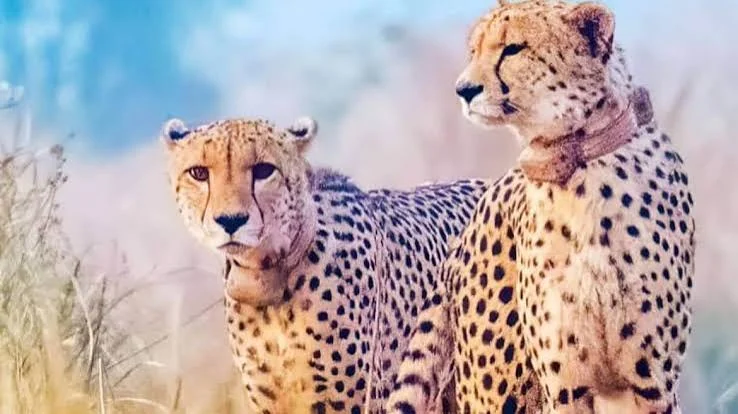
Today Kuno National Park is home to the largest cheetah population in Asia, and since 1 October 2025 visitors can see them. This is India's only cheetah safari, and one of very few places on earth where you can watch cheetahs against a landscape of kardhai forest and open grassland. This guide covers every safari gate, the booking process, current cheetah numbers and the conservation story unfolding here.
- Full name
- Kuno National Park (Kuno-Palpur)
- Location
- Sheopur & Morena districts, Madhya Pradesh
- National park area
- 748 sq km
- Wildlife division area
- 1,235 sq km
- Cheetah safari launched
- 1 October 2025
- Cheetah population
- 54 at Kuno (57 all-India)
- Free-ranging cheetahs
- 17
- Safari gates
- Tiktoli, Ahera, Peepalbawadi (all open)
- Open season
- 1 October – 30 June
- Closed
- 1 July – 30 September (monsoon)
- Advance booking
- Up to 120 days
- Nearest airport
- Gwalior (~180 km)
- Official booking
- kunocheetahjunglesafari.com
Project Cheetah — the story so far
Understanding Project Cheetah transforms a Kuno safari from a wildlife outing into witnessing history.
Extinction and the long absence
The Asiatic cheetah was declared extinct in India in 1952. For seventy years the country's grasslands held no cheetahs at all — a gap in India's predator ecosystem that conservationists spent decades trying to close.
September 2022 — the return
On 17 September 2022, eight cheetahs from Namibia — five females and three males — were released at Kuno National Park. This marked the first-ever intercontinental translocation of a large carnivore.
February 2023 — the second batch
Twelve more cheetahs arrived from South Africa, bringing the founder population to twenty.
The difficult years
Project Cheetah has not been without serious setbacks. Multiple adult cheetahs and cubs died in 2023 from a range of causes — a period the project's critics have scrutinised heavily and its managers have openly acknowledged. The release strategy was subsequently made significantly more conservative.
2024–2025 — breeding and free-ranging releases
India-born cubs began surviving to adulthood. In December 2023, males Agni and Vayu were released into the Parond forest range within the Ahera tourism zone — the first cheetahs viewable by tourists. In March 2025, female Gamini and her four cubs were released into the Khajuri tourism zone. In December 2025, on International Cheetah Day, female Veera and her two cubs were released, taking free-ranging numbers to nineteen.
February 2026 — Botswana arrivals
Nine cheetahs — six females and three males — arrived from Botswana, specifically to add genetic diversity to the existing Namibian and South African stock and reduce inbreeding risk.
Where things stand now
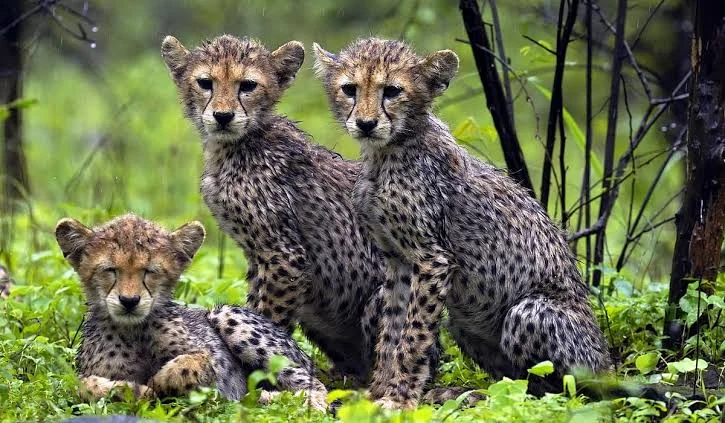
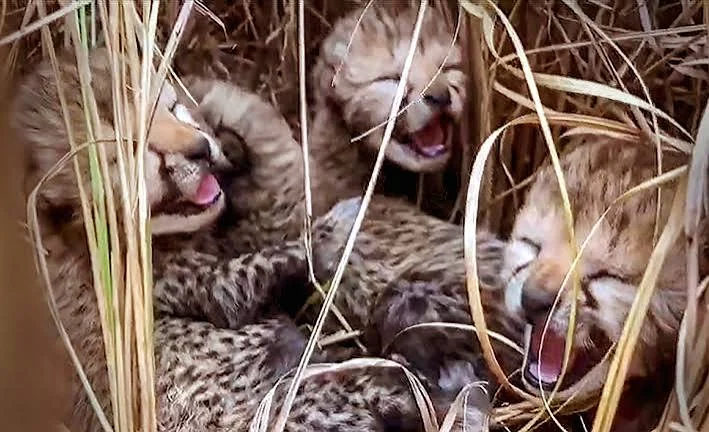
India currently has 57 cheetahs — 54 at Kuno and three at Gandhi Sagar Wildlife Sanctuary, a second site established to avoid concentrating the entire founder population in one place. Of the 54 at Kuno, 17 are free-ranging in the wild while the remainder are in soft bomas — large fenced enclosures of 50 to 150 hectares used for conditioning and breeding management. 28 of India's cheetahs are India-born cubs, the clearest sign the project is establishing a self-sustaining population.
Kuno Safari Permits & Vehicle Arrangements
Safari permits and vehicle arrangements depend on availability and applicable booking conditions. Share your travel dates on WhatsApp to receive a written quote before making any payment.
| Safari type | Booking basis | What's included |
|---|---|---|
| Full jeep — 6-seater (private) | Written quote on request | Safari permit and open jeep for your group only. The whole vehicle is yours, so you set the pace and seating. |
| Shared jeep (per seat) | Written quote on request | Safari permit and a seat on a shared open jeep. |
We will check current availability and the gate that suits your dates.
Safari gates and zones — complete guide
Kuno has three entry gates, and all three operate through the safari season. The tourism situation is more nuanced than most sources explain — here is the current picture.
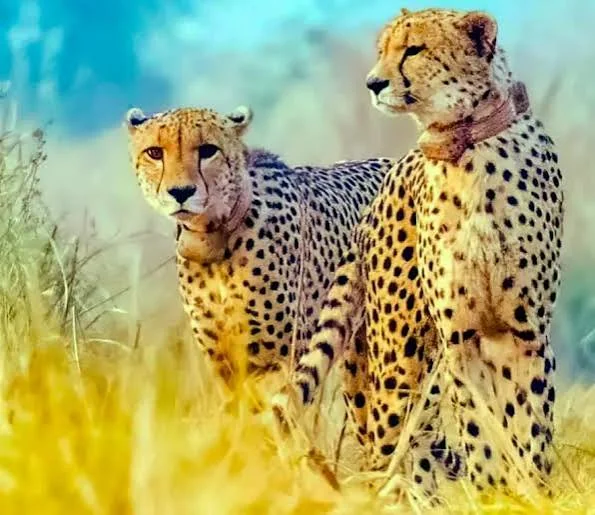
Ahera Gate — the main safari gate
Ahera has been the most prominent gate for cheetah viewing since the safari launched. It is accessed from the Pohri village side, roughly 20 km away. The landscape immediately beyond the gate is exceptional — mixed dense forest opening into wide grassland, precisely the habitat cheetahs favour. The Parond forest range, where males Agni and Vayu were first released for public viewing, falls within this tourism zone.
- Access from
- Pohri village (~20 km)
- Season
- 1 October – 30 June
- Terrain
- Mixed dense forest, open grassland
- Key area
- Parond forest range
- Best for
- Cheetah sightings, first-time visitors
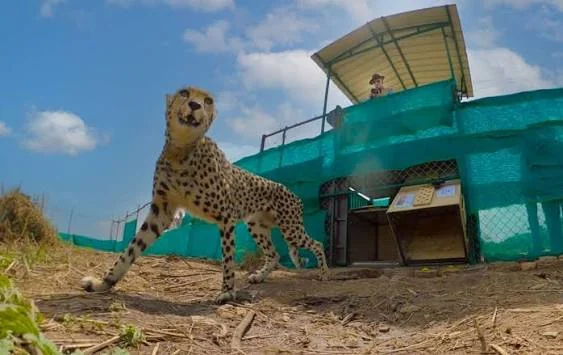
Peepalbawadi Gate
Peepalbawadi is the second operational gate, accessed from the Agra village side. Safari bookings are available here alongside Ahera, and drives tend to be quieter with fewer vehicles on the tracks.
- Access from
- Agra village
- Season
- 1 October – 30 June
- Best for
- Alternative access, quieter drives
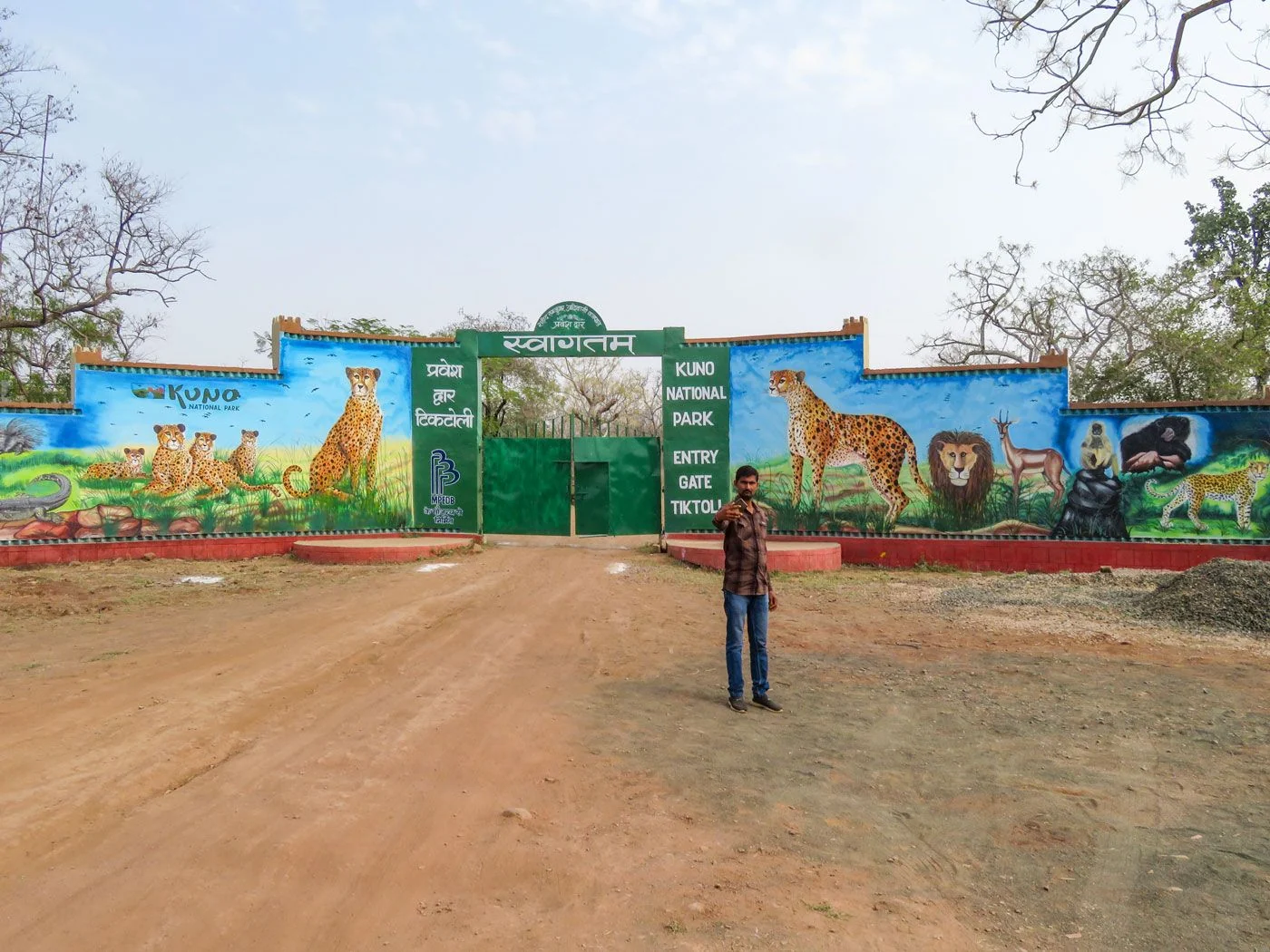
Tiktoli Gate — the original main entrance
Tiktoli is Kuno's original and principal entrance gate, located 18 km from Sesaipura village. During the early phase of Project Cheetah, access here was restricted because the quarantine enclosures and conditioning bomas essential to the reintroduction programme were located in this zone. That restriction has since been lifted, and Tiktoli now operates as a full safari gate throughout the season.
- Access from
- Sesaipura village (18 km)
- Season
- 1 October – 30 June
- Significance
- Kuno's original main entrance
- Best for
- Visitors approaching from the Sesaipura side
Khajuri tourism zone
Khajuri is a designated tourism zone where female cheetah Gamini and her four cubs were released into the wild in March 2025. As free-ranging cheetah numbers grow, this zone is expected to become increasingly productive for sightings.
Kuno safari gates — quick reference with locations
| Gate | Access from | Season | Google Maps |
|---|---|---|---|
| Tiktoli Gate | Sesaipura village (18 km) | 1 Oct – 30 June | View location |
| Ahera Gate | Pohri village (~20 km) | 1 Oct – 30 June | View location |
| Peepalbawadi Gate | Agra village | 1 Oct – 30 June | View location |
All three gates operate throughout the safari season, from 1 October to 30 June. The park closes entirely during the monsoon from 1 July to 30 September.
Note that several older travel websites still describe Tiktoli as closed to tourism. That restriction applied during the early phase of Project Cheetah, when quarantine and conditioning bomas limited access to the zone. Tiktoli now operates as a full safari gate alongside Ahera and Peepalbawadi.
Gate selection guide
| Your situation | Recommended gate |
|---|---|
| Coming via Sesaipura side | Tiktoli Gate |
| Coming via Pohri side | Ahera Gate |
| Coming via Agra village side | Peepalbawadi Gate |
| Cheetah focus, Parond range | Ahera Gate |
| Original main entrance | Tiktoli Gate |
TheForestStay note. Ahera has been the most established gate for cheetah viewing since the Parond range releases, but all three gates access productive habitat. Cheetahs at Kuno are genuinely free-ranging across large territories — sightings are not guaranteed at any gate. Choose your gate primarily based on your approach route and accommodation.
How to Book Kuno Cheetah Safari
- Select your travel dates. Kuno permits can be booked up to 120 days in advance, and the season runs 1 October to 30 June.
- Choose your safari slot — morning or evening.
- Choose full jeep or shared jeep. A full 6-seater jeep gives your group the vehicle to itself; a shared jeep is the economical option.
- Provide government-issued ID details for every visitor — Aadhaar, voter ID, PAN or driving licence for Indian nationals, and passport details for international visitors.
- Confirm the charges and complete the booking once availability is verified for your date, slot and gate.
- Receive your confirmation as per the booking process below, with the permit details for your chosen gate.
Safari booking process
Official booking channels
The official portal is kunocheetahjunglesafari.com. Bookings can also be made directly at the gates, subject to availability. Advance booking is strongly recommended, particularly for weekends and holidays.
Advance booking window
Kuno safari permits can be booked up to 120 days in advance. Because Kuno is India's only cheetah destination and vehicle numbers are deliberately restricted, weekend slots fill quickly — booking early is genuinely important here.
Documents required
- Full name, age, nationality and gender for every visitor
- Government-issued photo ID number for every visitor
- Indian nationals: Aadhaar Card, Voter ID, PAN Card or Driving Licence
- International visitors: passport details are mandatory
What the permit covers
The online booking permit includes charges for the permit, vehicle and guide. Nothing further is payable at the gate.
Booking rules
- Entry permits are issued to individuals and valid only for the specified date and time
- Permits are non-transferable
- Bookings operate on a first-come, first-served basis
- Vehicle numbers per shift are strictly limited
- You may book an entire 6-seater jeep or opt for a shared jeep safari
Safari timings and safari type
Kuno operates two safari shifts daily, timed to match cheetah and prey activity.
| Shift | Timing |
|---|---|
| Morning safari | 6:00 AM – 10:30 AM |
| Evening safari | 3:00 PM – 7:00 PM |
Timings shift seasonally with sunrise and sunset. Winter daylight hours are shorter; summer shifts start earlier and end later. Arriving early at your gate is strongly advised to confirm entry formalities and depart on schedule.
Currently, jeep safari is the only safari option at Kuno. Visitors may book an entire 6-seater jeep for privacy and flexibility, or opt for a shared jeep safari — a more economical choice for solo travellers and couples. Canter and other vehicle types are not currently operational.
Safari rules — strictly enforced
Kuno operates under unusually strict rules, reflecting the sensitivity of the cheetah reintroduction programme.
- Vehicles must travel below 20 km/h — cheetahs are vulnerable to vehicle disturbance
- Visitors must remain inside the vehicle at all times
- Music devices and speakers are banned
- No interference with animals is tolerated under any circumstances
- No littering
- Strict adherence to guide and forest staff instructions is mandatory
These rules exist because Project Cheetah remains an active scientific programme, not merely a tourism operation. Compliance genuinely matters.
Wildlife beyond cheetahs
Predators
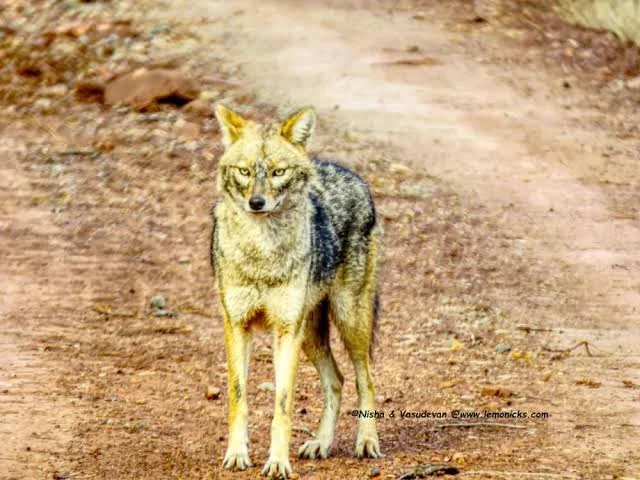
- Cheetah — 54 individuals, India's only wild population
- Indian leopard — healthy resident population
- Striped hyena
- Indian wolf — Kuno is significant wolf habitat
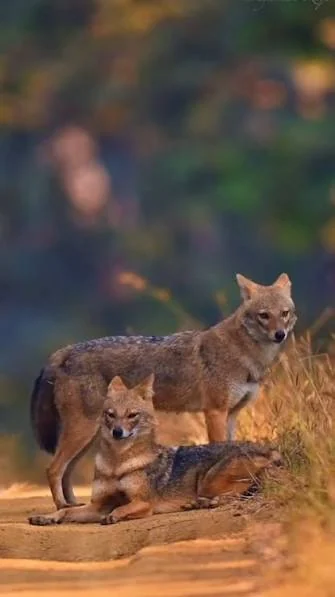
- Golden jackal, jungle cat and sloth bear
Herbivores
- Chital, sambar and nilgai — the prey base that made Kuno suitable for cheetah reintroduction
- Chinkara (Indian gazelle) — grassland specialist
- Four-horned antelope (chausingha)
- Blackbuck, wild boar and common langur
Birds — 200+ species
Kuno supports over 200 recorded bird species across its grassland, kardhai forest and riverine habitats along the Kuno River.
Chambal connection
Kuno sits close to the Chambal riverine system, home to gharial, mugger crocodile and the Gangetic river dolphin. Many visitors combine a Kuno safari with a Chambal boat excursion.
The landscape
Kuno's habitat is genuinely distinct from India's tiger reserves. Where Kanha and Bandhavgarh offer dense sal forest, Kuno provides open grassland interspersed with kardhai, khair and salai woodland — savanna-like terrain that closely resembles cheetah habitat in Africa. The Kuno River runs through the park, giving its name to the landscape and providing year-round water.
This openness is precisely why Kuno was selected for Project Cheetah. Cheetahs are sprinters requiring visibility and space — conditions dense Indian forests cannot provide. For visitors this means something practical: sightlines at Kuno are excellent. When wildlife is present, you generally see it clearly.
How to reach Kuno National Park
By air
Gwalior Airport is the nearest at approximately 180 km, with connections to Delhi, Mumbai, Indore and Bengaluru. Jaipur and Delhi airports are also practical for visitors combining Kuno with a wider north India itinerary.
By train
| Station | Notes |
|---|---|
| Gwalior | Best connectivity, major junction |
| Sawai Madhopur | Convenient if combining with Ranthambore |
| Kota | Good rail links |
| Jhansi | Well connected on the Delhi–Bhopal line |
| Jaipur | Major junction, wider connectivity |
By road
| From | Approximate distance |
|---|---|
| Gwalior | ~180 km |
| Sheopur | ~60 km |
| Ranthambore | ~220 km |
| Jaipur | ~300 km |
| Agra | ~250 km |
| Delhi | ~450 km |
Best time to visit Kuno
October to March — recommended. Winter is the best season for Kuno. Temperatures are pleasant, safari conditions comfortable, and wildlife activity high across both shifts. Bird activity peaks with migratory arrivals. The safari season opens on 1 October, and this window is when most visitors should plan.
April to June — hot but productive. Summer in this part of Madhya Pradesh is severe, with temperatures regularly exceeding 42°C. However, wildlife concentrates around water sources and sightings can be rewarding. Morning safaris remain viable; afternoon drives are demanding.
July to September — closed. Kuno National Park closes entirely for the monsoon from 1 July to 30 September.
Where to stay
Accommodation around Kuno is developing rapidly but remains limited compared to established tiger reserves.
- Kuno Retreat — the forest department is developing a dedicated lodging and dining facility to improve visitor comfort and encourage longer stays.
- Eco-lodges near the park — a growing number of small properties operate near the Ahera and Peepalbawadi gate areas.
- Gwalior — full-service hotels across all categories, approximately 180 km away; suitable for visitors treating Kuno as part of a wider itinerary.
- Kota — another practical base with more hotel options.
Planning note. Because accommodation near the gates is genuinely limited and safari slots are restricted, Kuno rewards early planning more than almost any Indian park currently.
Combining Kuno with other destinations
- Kuno + Ranthambore (4N/5D) — approximately 220 km apart. Combine India's only cheetahs with Rajasthan's most famous tigers; one of the strongest wildlife pairings in the country.
- Kuno + Chambal (3N/4D) — cheetah safari plus a Chambal boat safari for gharial, mugger crocodile and river dolphin.
- Golden Triangle + Kuno (6N/7D) — Delhi, Agra, Gwalior, Kuno, Jaipur. Adds genuine conservation history to India's most popular circuit.
- Kuno + Madhav National Park (3N/4D) — Madhav, near Shivpuri, was declared a tiger reserve in March 2025 and lies conveniently between Gwalior and Kuno.
Setting expectations — an honest note
Kuno deserves honesty rather than hype, and we would rather you arrive well-informed.
Cheetah sightings are not guaranteed. Of Kuno's 54 cheetahs, only 17 are currently free-ranging, and these animals range across very large territories. Many visitors do see cheetahs; many do not.
This is a young safari operation. The cheetah safari opened in October 2025. Infrastructure, guide expertise and accommodation are all still developing. Standards do not yet match Kanha, Bandhavgarh or Corbett.
What Kuno genuinely offers is the chance to witness one of the most ambitious conservation projects in the world at the moment it is unfolding — in landscape that looks like nowhere else in India, with a wildlife story that has no parallel. Visitors who come understanding this leave satisfied.
Frequently asked questions — Kuno cheetah safari
How does safari booking work for Kuno?+
Safari permits and vehicle arrangements depend on availability and applicable booking conditions. Share your travel dates on WhatsApp to receive a written quote before making any payment.
What documents are required for booking?+
Full name, age, nationality and gender plus a government-issued photo ID number for every visitor. Indian nationals can use an Aadhaar card, voter ID, PAN card or driving licence; international visitors must provide passport details.
Can I book a shared jeep safari?+
Yes. You can either book an entire 6-seater jeep for your group or take a seat on a shared jeep, which is the more economical choice for solo travellers and couples. Jeep safari is currently the only safari type operating at Kuno.
Can you see cheetahs at Kuno National Park?+
Yes. India's first cheetah safari opened at Kuno on 1 October 2025. However, sightings are not guaranteed — of Kuno's 54 cheetahs, 17 are currently free-ranging across large territories while the remainder are in soft bomas for conditioning and breeding management.
How many cheetahs are there at Kuno?+
Kuno has 54 cheetahs, with a further three at Gandhi Sagar Wildlife Sanctuary — an all-India total of 57. Of these, 28 are India-born cubs. Seventeen cheetahs at Kuno are free-ranging in the wild.
Which gate should I book for a Kuno cheetah safari?+
All three gates — Tiktoli, Ahera and Peepalbawadi — operate from 1 October to 30 June. Ahera has been the most established for cheetah viewing since the Parond forest range releases fall within its zone. Tiktoli is Kuno's original main entrance, accessed from Sesaipura. Choose based on your approach route and accommodation.
Is Tiktoli Gate open at Kuno National Park?+
Yes. Tiktoli operates as a full safari gate from 1 October to 30 June, like the other two gates. Several older travel websites still describe it as closed — that restriction applied during the early phase of Project Cheetah, when quarantine and conditioning bomas limited access to the zone.
How do I book a Kuno cheetah safari?+
Bookings can be made online at kunocheetahjunglesafari.com or directly at the gates subject to availability. Permits can be booked up to 120 days in advance and operate on a first-come, first-served basis. TheForestStay can arrange permits, vehicles and stays for you.
What are the Kuno safari timings?+
Morning safaris run from approximately 6:00 AM to 10:30 AM and evening safaris from 3:00 PM to 7:00 PM. Timings shift seasonally with sunrise and sunset.
When is Kuno National Park closed?+
Kuno closes from 1 July to 30 September each year for the monsoon season, reopening on 1 October.
How far is Kuno from Gwalior?+
Kuno National Park is approximately 180 km from Gwalior, the nearest airport. Gwalior is also the most convenient railway station, though Sawai Madhopur, Kota, Jhansi and Jaipur all offer reasonable rail access.
What are the safari rules at Kuno?+
Rules are strictly enforced — vehicles must travel below 20 km/h, visitors must remain inside the vehicle at all times, music devices are banned, and any interference with animals is prohibited. These reflect Project Cheetah's status as an active scientific programme.
Can I combine Kuno with Ranthambore?+
Yes, and this is one of India's strongest wildlife pairings. The two parks are approximately 220 km apart, allowing visitors to see India's only wild cheetahs and Ranthambore's famous tigers in a single trip of four to five nights.
What other animals can I see at Kuno?+
Kuno supports leopards, striped hyenas, Indian wolves, sloth bears, jackals, chital, sambar, nilgai, chinkara, four-horned antelope and blackbuck, alongside more than 200 bird species. The nearby Chambal river system holds gharial, mugger crocodile and Gangetic river dolphin.
Is Kuno National Park worth visiting?+
For travellers interested in conservation and in seeing something no other Indian park offers, yes. Kuno is India's only cheetah destination and its landscape — open grassland and kardhai woodland — is genuinely unlike the country's tiger reserves. Visitors should arrive understanding that cheetah sightings are not guaranteed and that safari infrastructure is still developing.
Further reading
Read our complete Kuno cheetah safari planning guide for the cheetah reintroduction story, wildlife beyond cheetahs and park rules.
Planning Kuno with Ranthambore? See the combined trip guide for routes, distances and a suggested itinerary.
Ready to plan your wildlife journey?
Share your dates and preferences — our specialists reply within a working day with permits, gypsies and resort options bundled into one clear itinerary.
Offices · Bhopal (HO) · Delhi
Continue exploring
Ranthambore Tiger Reserve
220 km away — zones, sighting rates, booking categories and famous tigers.
Read more →Sariska Tiger Reserve
Rajasthan's comeback reserve — four gates, Zone 1–4 routes, four hours from Delhi.
Read more →Panna Tiger Reserve
Another Madhya Pradesh recovery story, with boat safaris on the Ken.
Read more →All Tiger Reserves
Kanha, Bandhavgarh, Pench, Satpura, Panna and more.
Read more →